CATEGORY: Conditioners
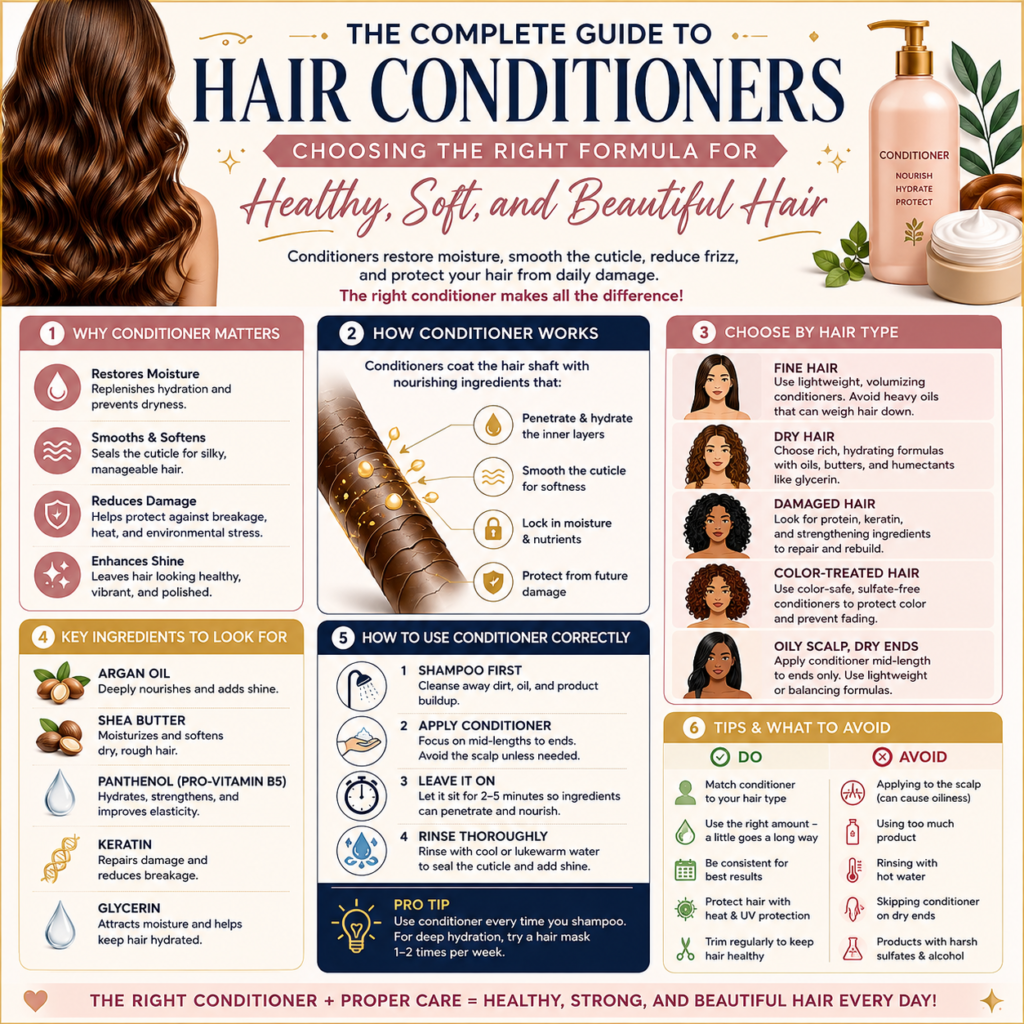
Conditioner is one of the most important yet misunderstood hair care products. While shampoo cleanses the scalp and removes dirt, conditioner restores moisture, smooths the hair cuticle, reduces friction, and protects hair from everyday damage. A well-chosen conditioner can transform dry, tangled, or dull hair into hair that feels softer, stronger, shinier, and easier to manage.
Whether your hair is straight, wavy, curly, coily, color-treated, or chemically processed, understanding how conditioners work will help you build a healthier hair care routine.
What Does a Hair Conditioner Actually Do?
After shampooing, the outer layer of each hair strand—the cuticle—becomes slightly raised. Conditioners contain ingredients that coat and smooth this outer layer, helping to:
Restore moisture.
Reduce frizz.
Improve shine.
Minimize static electricity.
Detangle hair.
Reduce breakage caused by brushing.
Protect hair from environmental stress.
Conditioners work by making the hair surface smoother, allowing strands to glide past one another instead of catching and breaking.
Why Every Hair Type Benefits from Conditioner
Many people believe only dry hair requires conditioner, but every hair type benefits from conditioning.
Fine Hair
Fine hair needs lightweight conditioners that moisturize without weighing the hair down.
Thick Hair
Thicker hair often requires richer formulas to maintain softness and reduce frizz.
Curly Hair
Curly hair naturally loses moisture faster because scalp oils travel less efficiently down the hair shaft. Rich conditioners help maintain curl definition and elasticity.
Color-Treated Hair
Hair coloring weakens the protective cuticle. Conditioning products help restore softness while helping preserve cosmetic appearance.
Mature Hair
As hair ages, it often becomes drier and more fragile. Hydrating conditioners can improve manageability and shine.
Different Types of Hair Conditioners
Not every conditioner performs the same function.
Daily Conditioner
Designed for regular use after shampooing.
Best for:
Normal hair
Slight dryness
Everyday maintenance
Deep Conditioner
Contains richer conditioning ingredients designed to provide intensive moisture.
Best for:
Damaged hair
Bleached hair
Curly hair
Very dry hair
Usually applied once or twice per week.
Leave-In Conditioner
Applied after washing and left in the hair without rinsing.
Benefits include:
Easier styling
Frizz reduction
Additional moisture
Heat styling support
Improved detangling
Co-Wash Conditioner
A cleansing conditioner designed to gently cleanse while conditioning, often preferred by people with curly or textured hair.
Ingredients Commonly Found in Conditioners
Modern conditioners combine several categories of ingredients.
Humectants
These attract moisture to the hair.
Examples include:
Glycerin
Panthenol
Aloe vera
Emollients
These soften the hair and improve flexibility.
Examples include:
Shea butter
Coconut oil
Argan oil
Jojoba oil
Proteins
Proteins temporarily reinforce damaged hair by helping fill weakened areas.
Examples:
Hydrolyzed keratin
Wheat protein
Silk protein
Silicones
Silicones create a smooth protective coating that improves shine and reduces friction.
Some formulas are silicone-free for users who prefer lighter products.
Matching Conditioner to Your Hair Needs
The best conditioner depends on your hair rather than current trends.
Hair Type Recommended Conditioner
Fine Hair Lightweight volumizing
Oily Hair Light moisturizing
Dry Hair Rich hydrating
Curly Hair Deep moisturizing
Damaged Hair Protein + moisture
Color-Treated Hair Color-safe moisturizing
Frizzy Hair Smoothing formulas
How to Apply Conditioner Correctly
Many people apply conditioner incorrectly.
For best results:
Wash hair thoroughly.
Gently squeeze out excess water.
Apply conditioner mainly from the mid-lengths to the ends.
Use fingers or a wide-tooth comb to distribute evenly.
Leave it on for several minutes according to the product instructions.
Rinse thoroughly.
Unless specifically designed for scalp use, most conditioners should not be heavily applied directly to the scalp.
Common Conditioner Mistakes
Several habits reduce the effectiveness of conditioners.
Using Too Much Product
Excess conditioner can leave hair heavy and dull.
Skipping Conditioner
Hair may become rougher, harder to brush, and more prone to breakage.
Choosing the Wrong Formula
Heavy conditioners may overwhelm fine hair, while lightweight formulas may not adequately moisturize dry or damaged hair.
Rinsing Too Quickly
Conditioners need a short contact time to work effectively.
Conditioner and Heat Styling
Frequent use of hair dryers, straighteners, and curling irons increases moisture loss.
Conditioners help prepare the hair for styling by improving flexibility and reducing friction, although dedicated heat protectants remain important when using high temperatures.
Seasonal Hair Conditioning
Hair needs often change throughout the year.
Summer
Sun, salt water, and chlorinated pools can leave hair dry and rough. Conditioning after exposure helps replenish moisture and improve softness.
Winter
Cold weather and indoor heating often increase dryness, making richer conditioners or occasional deep conditioning especially beneficial.
Can You Condition Too Much?
While conditioning is beneficial, excessive use of heavy products may:
Reduce volume.
Make hair appear greasy.
Cause product buildup.
Make styling more difficult.
Using the appropriate formula and amount usually avoids these issues.
Signs You Need a Better Conditioner
Your current conditioner may not be ideal if you notice:
Persistent tangles.
Excessive frizz.
Rough texture.
Lack of shine.
Increased breakage.
Difficulty brushing.
Hair that feels dry immediately after washing.
Building a Complete Conditioning Routine
Healthy hair rarely depends on a single product.
A balanced routine often includes:
Gentle shampoo.
Appropriate conditioner.
Weekly deep treatment when needed.
Leave-in conditioner for extra moisture if desired.
Heat protection before styling.
Regular trimming of split ends.
Consistency generally produces better long-term results than frequently changing products.
Final Thoughts
Conditioner is far more than an optional finishing step. It helps maintain moisture, improves manageability, reduces breakage, enhances shine, and supports healthier-looking hair over time. Selecting a formula suited to your individual hair type and using it correctly can make a noticeable difference in the appearance and feel of your hair.
The best hair care routine begins with understanding your hair’s unique needs—and choosing a conditioner that helps protect and nourish it every time you wash.
The End
AMBERSEABEAUTY.COM
 Discover More From Our Family of Websites
 ZodiacBearing (Astrology, Tarot, Numerology, Angel Numbers & Spiritual Guidance)
 Velourana (Beauty, Makeup, Hair Care, Skincare & Beauty Tips)
 HavenBearing (Home, Living, Organization, Décor & Everyday Inspiration)
 PawBearing (Pet Care, Dog Breeds, Animal Health, Training & Pet Products)
 PsyCatherine (Notes From the Journal of a Psychologist on Real Life)