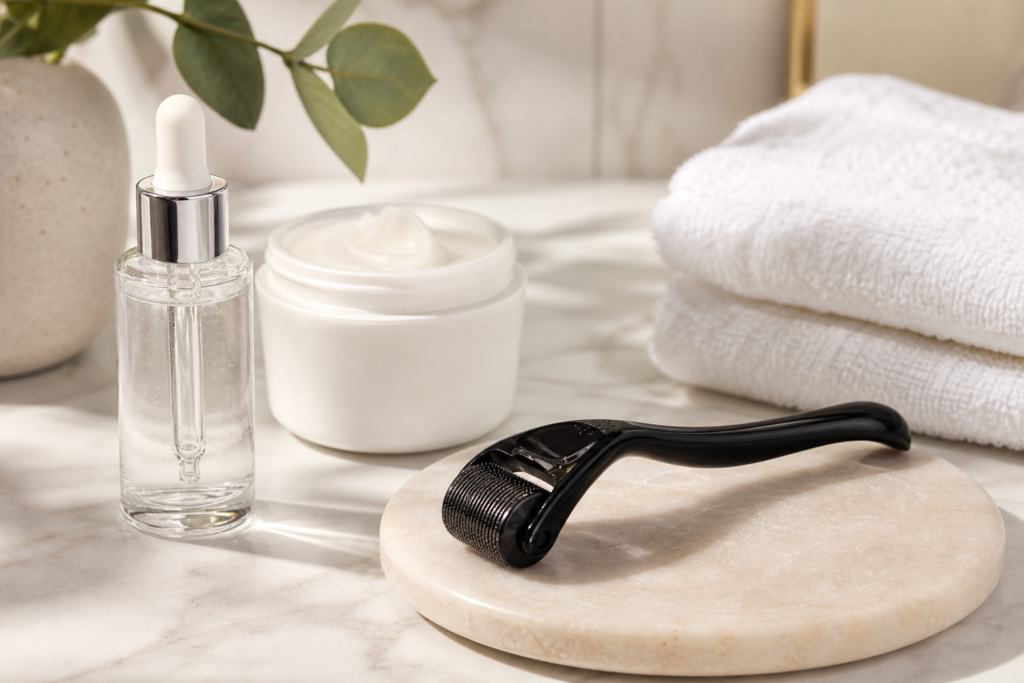
What a derma roller does
A derma roller is a handheld tool covered with tiny needles that glide over the skin. People often add it to a beauty routine to support smoother-looking skin and to help skincare products sit more evenly on the surface. If you are new to derma rolling, the most important part is not speed or pressure. It is using the tool gently, keeping everything clean, and giving your skin time to recover.
Because this tool creates a more intense skin-contact experience than a standard facial massage tool, a careful approach matters. Good technique can help you avoid unnecessary irritation, while poor technique can leave skin feeling stressed, dry, or overly sensitive.
Who should keep it simple or skip it
At-home derma rolling is best approached cautiously, especially if your skin is reactive. It is generally smarter to wait or avoid using a derma roller if your skin is currently irritated, sunburned, actively breaking out, or feels raw after exfoliation. If you have a history of strong reactions to skincare, keep your routine extra minimal and consider patch testing new products separately before using them after rolling.
If you are unsure whether your skin is in a good state for derma rolling, the safest beauty rule is simple: do not roll over inflamed, compromised, or uncomfortable skin.
How to choose a beginner-friendly derma roller
Not all rollers feel the same. For beginners, it is wise to choose a tool designed for home cosmetic use and to avoid starting with anything that feels too aggressive. Look for a roller that is marketed clearly, comes from a reputable seller, and includes cleaning and storage instructions.
- Choose a roller intended for personal at-home facial use.
- Use only a clean, undamaged tool.
- Avoid sharing your roller with anyone else.
- Replace the tool if it becomes bent, dull, or difficult to sanitize properly.
If product details are unclear or the packaging gives little guidance about care, that is usually a sign to keep shopping.
What to do before you start
Preparation makes a big difference. Your skin and your tool should both be clean before every session. Avoid derma rolling right after strong exfoliants, harsh scrubs, or any routine that already leaves your skin feeling tingly or stripped.
- Wash your hands thoroughly.
- Cleanse your face with a gentle cleanser and pat dry with a fresh towel.
- Sanitize the roller according to its care instructions.
- Tie hair back so it stays away from the face.
- Make sure your skin feels calm, not irritated.
Many people find nighttime easiest because it gives the skin quiet time afterward without makeup, sun exposure, or a busy routine layered on top.
How to use a derma roller step by step
The goal is controlled, gentle passes. You do not need to press hard to make the session effective for cosmetic use. In fact, a lighter hand is usually the better choice for beginners.
- Start with one area of the face, such as the forehead or one cheek.
- Hold the skin lightly taut with your free hand if needed.
- Roll gently in one direction a few times, then lift the tool before changing direction.
- Repeat with vertical and diagonal passes if desired, always lifting between directions rather than dragging and twisting.
- Move slowly to the next section of the face.
- Avoid the eyelids, lips, and any visibly irritated areas.
Think of the motion as neat and deliberate rather than fast. Rushing increases the chance of overworking one area. Your skin may look slightly flushed afterward, which is one reason many people prefer to do this as part of an evening routine.
How often should beginners use a derma roller?
Less is usually more at the beginning. It can be tempting to use a derma roller often, especially if you enjoy the ritual, but your skin needs time between sessions. Start conservatively and pay attention to how your skin feels over the next day or two. If it seems tight, overly sensitive, or uncomfortable, space your sessions farther apart rather than pushing through.
A good beginner mindset is to focus on consistency and gentleness, not frequency. Your routine should feel manageable and calm, not intense.
What to apply after derma rolling
After rolling, keep skincare simple. Skin can feel more delicate, so this is not the moment for a complicated routine filled with strong actives. Choose products that feel soothing and straightforward.
- A gentle hydrating serum can be a simple option.
- A basic fragrance-free moisturizer can help support comfort.
- If it is daytime, finish with sunscreen once your skin feels ready.
It is smart to skip products that commonly sting or feel harsh on freshly rolled skin. If a product usually causes tingling even on a normal day, save it for another time. Strong exfoliating acids, retinoid products, and heavily fragranced formulas are often better avoided immediately after a session.
How to clean and store your derma roller
Cleaning is one of the most important parts of using this tool. A roller should be sanitized after every use and stored where it can stay dry and protected from dust.
- Rinse and clean the tool only as directed by the manufacturer.
- Sanitize it thoroughly after each session.
- Let it dry completely on a clean surface.
- Store it in its protective case.
- Keep it out of humid, messy, or shared bathroom spaces if possible.
Never put away a damp roller. Moisture and poor storage can shorten the life of the tool and make hygiene more difficult to maintain.
Common beginner mistakes to avoid
Using too much pressure
Pushing hard does not make the session better. It only increases the chance of irritation.
Rolling over active breakouts or damaged skin
If an area is inflamed, tender, or visibly compromised, leave it alone until the skin is calm again.
Using too many strong products afterward
After derma rolling, simple hydration is usually a better choice than a long list of actives.
Not cleaning the tool well enough
Good hygiene is essential. Skipping proper cleaning is one of the easiest ways to turn a beauty tool into a frustrating experience.
Doing sessions too often
Skin needs recovery time. Overuse can leave it feeling stressed rather than supported.
How to tell if your routine is too much
Your skin often gives clear signals when you need to scale back. Warning signs can include ongoing redness, unusual tenderness, stinging with basic products, or a tight feeling that lasts longer than expected. If that happens, pause derma rolling and keep your routine focused on a gentle cleanser, moisturizer, and daily sun protection until your skin feels normal again.
The best results usually come from patience. Beauty tools tend to work best as part of a balanced routine, not as a shortcut or a challenge to see how much your skin can handle.
A simple beginner routine example
If you want to keep things uncomplicated, try this general approach:
- Cleanse your face gently in the evening.
- Sanitize the derma roller.
- Roll lightly in controlled sections.
- Apply a simple hydrating serum or moisturizer.
- Clean and store the roller properly.
- Use sunscreen the next day.
This kind of routine is easier to repeat and easier to adjust if your skin needs more rest.
Final thoughts
A derma roller can be a useful addition to a beauty routine when it is used carefully, cleanly, and with realistic expectations. For beginners, the safest path is a light touch, a simple aftercare routine, and enough time between sessions. If your skin stays comfortable, that is usually a better sign than trying to make the process feel intense.
When in doubt, be gentler than you think you need to be. Calm, consistent habits are often the ones that fit best into a long-term skincare routine.
https://amberseabeauty.com/
 Discover More From Our Family of Websites
 ZodiacBearing (Astrology, Tarot, Numerology, Angel Numbers & Spiritual Guidance)
 Velourana (Beauty, Makeup, Hair Care, Skincare & Beauty Tips)
 HavenBearing (Home, Living, Organization, Décor & Everyday Inspiration)
 PawBearing (Pet Care, Dog Breeds, Animal Health, Training & Pet Products)
 PsyCatherine (Notes From the Journal of a Psychologist on Real Life)