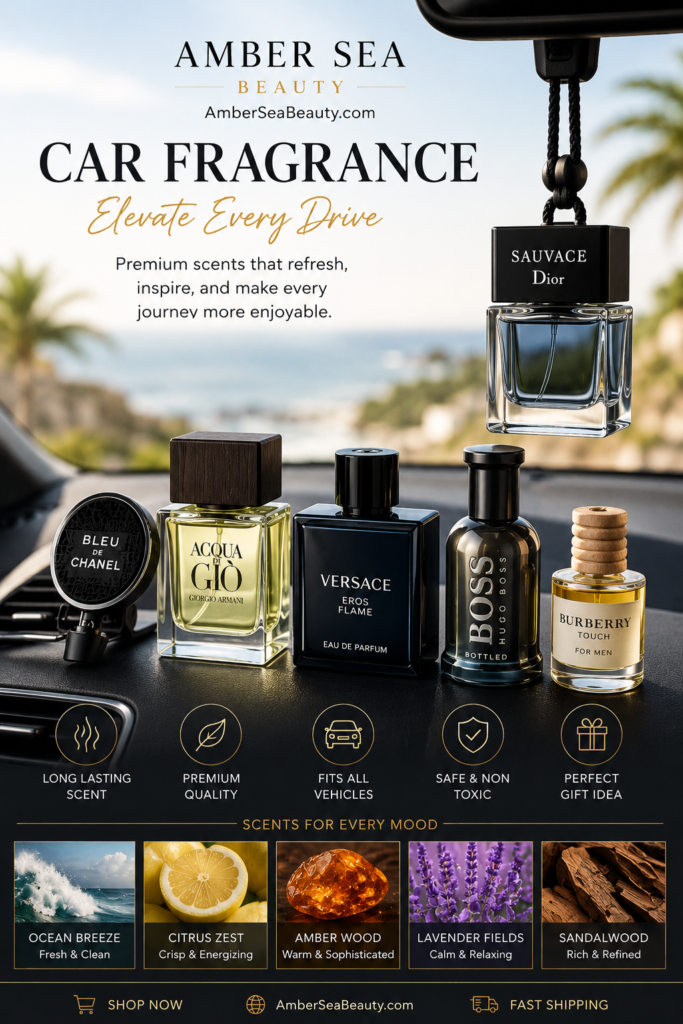
CATEGORY: Car Fragrance
Car fragrance sprays are one of the simplest and most flexible ways to scent a vehicle interior.
Unlike vent clips, gels, hanging fresheners, or passive diffusers, a spray does not release fragrance continuously. The user decides exactly when the scent is applied and approximately how strong the result will be.
This gives sprays one major advantage:
Control.
A light application can create a subtle background fragrance.
A slightly stronger application can refresh the cabin before passengers arrive.
The bottle can remain unused for days and then be applied only when needed.
This makes sprays particularly useful for drivers who do not want a fragrance product constantly releasing scent inside the car.
The format is simple, but the way a spray is used can make a significant difference.
Too little may disappear quickly.
Too much can make a small cabin feel overwhelming.
Spraying in the wrong location may create unnecessary residue.
Using fragrance before cleaning may simply cover an unpleasant odor instead of improving the overall environment.
Understanding the product format therefore helps the driver get a cleaner, more balanced result.
What Is a Car Fragrance Spray?
A car fragrance spray is a liquid fragrance product designed to release scent into the vehicle cabin through a fine mist or aerosol-style application, depending on the product design.
The bottle may use:
A manual pump.
A trigger sprayer.
A pressurized aerosol.
A compact atomizer.
The fragrance liquid is dispersed into the air or onto suitable surfaces according to the product instructions.
The important difference between sprays and passive products is that diffusion begins only when the user activates the product.
There is no permanent fragrance source continuously sitting in the cabin unless some scent remains on treated materials.
Why Sprays Appeal to Drivers Who Want Flexibility
A passive product is always working.
A hanging freshener continues releasing scent.
A gel remains open.
A vent clip stays attached.
An oil diffuser keeps evaporating.
A spray behaves differently.
If you do not use it, nothing is added.
This is ideal for people who:
Drive infrequently.
Prefer fragrance only occasionally.
Share the car with people who dislike strong scents.
Change fragrance often.
Want to control intensity manually.
Prefer a clean dashboard without visible fragrance accessories.
The driver can adjust scent from one journey to the next.
A Spray Can Be Stronger or Softer Depending on Dosage
A car cabin has limited air volume.
That means a small number of sprays may already create a noticeable effect.
If the fragrance is concentrated, one or two applications may be enough.
If it is lighter, several may be required.
The safest approach is usually to begin with less.
Spray lightly.
Wait.
Enter the vehicle.
Assess the strength.
Then add more only if necessary.
This is much easier than trying to remove excess fragrance after the cabin has become too heavily scented.
Small Cars Need Less Product
Vehicle size influences fragrance intensity greatly.
A compact hatchback contains much less interior air than:
A large saloon.
An SUV.
A people carrier.
A van.
The same number of sprays can therefore feel significantly stronger in a smaller vehicle.
This is one reason dosage should never be treated as universal.
A product that seems mild in a large car may become intense in a small one.
Larger Vehicles May Need More Even Distribution
In a larger vehicle, applying all the fragrance in one location may produce an uneven result.
The front may smell strong while the rear remains almost unscented.
A more balanced application can help.
Depending on the product instructions, the user may apply small amounts in different areas rather than concentrating everything near the driver’s seat.
The objective is even atmosphere, not maximum strength.
Car Fragrance Spray Is Useful Before Passengers Arrive
One of the most practical uses of spray fragrance is a quick cabin refresh before carrying passengers.
The car may already be clean but slightly stale after being parked.
A light spray can make the interior feel fresher.
This is particularly useful before:
Business appointments.
Airport pickups.
Family trips.
Social outings.
Long journeys.
The advantage is immediate effect.
There is no need to wait for a passive diffuser to build fragrance slowly.
Sprays Are Convenient After Interior Cleaning
A freshly cleaned car provides the best background for fragrance.
Vacuuming.
Removing rubbish.
Cleaning mats.
Wiping surfaces.
Cleaning upholstery where appropriate.
Ventilating.
Once the underlying cabin is clean, fragrance can become a finishing touch.
A light spray after cleaning can reinforce the impression of freshness.
Using fragrance this way usually produces a better result than trying to overpower existing odors.
Fragrance Spray Should Not Replace Cleaning
This principle is worth repeating because it affects the entire experience.
If the car smells because of:
Food residue.
Damp fabric.
Pet accidents.
Smoke.
Spilled drinks.
Dirty mats.
Moisture.
A fragrance spray does not remove the source.
It adds another smell.
The result may become:
Vanilla plus damp.
Citrus plus smoke.
Floral plus old food.
That is rarely desirable.
Persistent odors should be addressed at the source first.
Airing the Car Before Spraying Can Improve the Result
If the car has been closed for a long period, opening the doors or windows briefly can help remove stale air before fragrance is added.
This gives the spray a cleaner background.
It also reduces the temptation to compensate for stale air with excessive product.
Fresh air and fragrance perform different functions.
One ventilates.
The other adds scent.
Spray Into the Air Only if the Product Is Intended for That Use
Not all sprays are designed for exactly the same application.
Some are intended primarily for cabin air.
Others may also be suitable for fabric.
Some may be formulated for specific surfaces.
The label should always be followed.
A product designed for the air should not automatically be sprayed onto:
Leather.
Plastic trim.
Touchscreens.
Painted surfaces.
Headliners.
Upholstery.
Different materials can react differently to fragrance liquids.
Avoid Spraying Sensitive Surfaces Directly
Car interiors contain many finishes.
Glossy plastic.
Leather.
Synthetic leather.
Fabric.
Metal trim.
Screens.
Wood-effect surfaces.
Painted details.
A fragrance spray should not be applied directly onto these unless the manufacturer explicitly states that the product is suitable.
Residue can potentially create:
Marks.
Discoloration.
Streaks.
Sticky areas.
Always use the intended application method.
Fabric Fragrance Sprays Are a Separate Subcategory
Some car sprays are designed specifically for fabric.
These may be intended for:
Seats.
Carpets.
Boot liners.
Fabric mats.
Upholstered panels.
These products can release fragrance gradually from the treated material.
They behave differently from a simple air spray.
Because the fragrance remains on fabric longer, the result may be more persistent.
Always test where recommended and follow care instructions.
Air Sprays Usually Give a Faster but Shorter Effect
An air-focused fragrance mist typically provides an immediate scent.
You notice it quickly.
But because the product is suspended primarily in the cabin air, the effect may fade sooner than a gel, vent clip, or oil diffuser.
This is not necessarily a disadvantage.
Many users choose spray specifically because they do not want long-term continuous scent.
Sprays Make It Easy to Change Fragrance
One of the best advantages of the spray format is variety.
You can use citrus today.
Woody fragrance another week.
Fresh linen after cleaning.
Amber during winter.
A passive diffuser usually remains in place until the fragrance fades.
A spray allows much easier rotation.
This appeals to drivers who enjoy fragrance as part of mood or season.
Seasonal Fragrance Rotation Works Particularly Well With Sprays
Because the product is not permanently diffusing, sprays make seasonal changes simple.
In warmer months:
Lemon.
Bergamot.
Marine.
Green notes.
Fresh linen.
In colder months:
Amber.
Vanilla.
Leather.
Woods.
Spice.
The driver can keep several bottles and choose according to mood without needing to replace an installed device.
Car Fragrance Sprays Can Be Layered Carefully
Some people enjoy combining fragrance products.
For example, a mild vent clip provides continuous background scent while a spray is used occasionally for a stronger refresh.
This can work.
The important word is carefully.
If the two fragrances are unrelated, the cabin can smell confused.
A better approach is pairing similar fragrance families.
Examples:
Citrus vent clip + citrus spray.
Leather diffuser + woody spray.
Fresh linen gel + clean musk spray.
The spray should enhance the existing scent rather than fight it.
Using Too Many Fragrance Products Can Overwhelm the Cabin
It is easy to assume that if one product is pleasant, several will be better.
But the vehicle is a small enclosed environment.
Vent clip.
Hanging freshener.
Spray.
Oil diffuser.
Gel.
Combined together, these can create excessive fragrance very quickly.
A refined cabin usually benefits from restraint.
One main fragrance source and one occasional supporting product is often enough.
How Long Does a Spray Fragrance Last?
There is no universal answer.
Longevity depends on:
The fragrance formula.
How much is applied.
Where it is applied.
Vehicle size.
Temperature.
Ventilation.
Whether windows are opened.
Whether the product reaches fabric or remains mostly airborne.
A light mist may last a relatively short period.
A spray applied to suitable fabric, if specifically designed for that use, may persist longer.
The product instructions provide the best guidance for the specific formula.
Heat Can Make a Spray Smell Stronger Initially
A hot vehicle can intensify fragrance perception.
When the cabin has been sitting in direct sunlight, scent can become very strong after application.
The same number of sprays that feels comfortable in winter may feel excessive in summer.
This is especially important in hot climates.
Starting with a very light application is usually sensible.
Cold Weather Can Make Fragrance Feel Softer
In cooler conditions, some fragrance materials evaporate more slowly.
The spray may seem less intense.
The cabin may also be ventilated differently.
Heating systems can then alter how the fragrance moves through the vehicle.
Season affects the experience.
Air-Conditioning Can Redistribute the Fragrance
When the climate system is operating, airflow can move scent throughout the cabin.
This can help create a more even result.
However, the fragrance should not be sprayed directly into ventilation components unless the product specifically instructs this.
A general cabin spray and an HVAC treatment product are not necessarily the same thing.
Some Products Are Specifically Designed for Ventilation Systems
There are specialized automotive odor and fragrance products intended for use with vehicle air-conditioning systems.
These should not be confused with ordinary cabin fragrance sprays.
They may have specific procedures involving:
Air intake.
Recirculation.
Ventilation settings.
Engine operation.
Application locations.
The instructions should be followed exactly.
A general fragrance spray should not be improvised into an HVAC treatment.
Citrus Sprays Are Often Easy to Use Lightly
Citrus fragrance works especially well in spray form because the profile often feels bright and immediate.
Lemon.
Orange.
Bergamot.
Grapefruit.
Lime.
A small amount can make the cabin feel fresher without necessarily creating a heavy perfume effect.
This can suit people who prefer a clean, energetic atmosphere.
Fresh Linen Sprays Can Reinforce a Clean Interior
Fresh linen, clean cotton, and soap-like fragrances are popular for vehicle sprays because they create a familiar cleanliness association.
They work particularly well after:
Vacuuming.
Cleaning mats.
Washing upholstery.
General interior detailing.
The fragrance complements the idea of a freshly maintained vehicle.
Woody Sprays Can Feel More Like Personal Fragrance
Woody car sprays often resemble home or personal fragrance styles.
Cedar.
Sandalwood.
Vetiver.
Dry woods.
Smoky accords.
These tend to feel deeper and more refined than very simple air-freshener profiles.
They can be especially appealing in vehicles with:
Dark interiors.
Leather seating.
Wood-effect trim.
Minimal styling.
Leather-Style Sprays Can Reinforce the Cabin Character
Leather fragrance is strongly associated with automotive interiors.
A leather-style spray can give a car a warmer and more traditional cabin scent.
Some products are designed to suggest:
New leather.
Polished leather.
Warm leather.
Leather with wood.
Leather with amber.
This fragrance family is often stronger than light citrus or linen, so dosage should be controlled carefully.
Vanilla Sprays Require Restraint
Vanilla is pleasant to many people, but spray format can make sweetness appear quickly.
One or two applications may be enough.
More can become heavy.
A vanilla fragrance blended with:
Woods.
Amber.
Musk.
Leather.
May feel more balanced than very sweet dessert-style vanilla.
Amber and Musk Sprays Can Create a Luxury-Fragrance Effect
Amber and musk profiles often feel more like perfume than traditional air freshener.
They can create a richer cabin atmosphere.
Because these notes tend to have depth, the spray should generally be used lightly at first.
A large application can become intense during long journeys.
Fruity Sprays Can Feel Bright and Informal
Apple.
Berry.
Cherry.
Peach.
Mango.
Tropical fruits.
These scents can make the car feel more playful.
They are often popular because the fragrance is easy to recognize.
The risk is sweetness.
A very sweet fruit spray can build quickly in a closed vehicle.
Again, lower dosage usually produces a cleaner result.
Gourmand Sprays Are Better for People Who Already Know They Like Sweet Scents
Coffee.
Caramel.
Chocolate.
Coconut.
Dessert vanilla.
These profiles are highly distinctive.
They may be enjoyable for someone who likes sweet fragrance generally.
For other passengers, they can be intense.
Gourmand sprays are usually best used sparingly.
Marine Sprays Create a Fast Fresh-Air Impression
Marine and aquatic fragrances work especially well in a spray because the immediate burst can make the cabin feel cooler and cleaner.
They may use:
Ozone-style accords.
Water notes.
Marine notes.
Clean musk.
Light citrus.
These are often easy to use before a drive because they do not necessarily leave a heavy sweet impression.
Floral Sprays Can Range From Very Light to Very Strong
Floral is not one fragrance category in practical terms.
A light peony spray may feel soft.
Lavender can feel calming.
Rose can become rich.
Jasmine can be intense.
Orange blossom may combine floral and citrus freshness.
Choose according to the exact blend rather than assuming all floral sprays behave similarly.
Fragrance Strength Should Match Driving Time
The longer you remain inside the car, the more important moderation becomes.
A strong fragrance may smell excellent when you first enter.
After forty-five minutes, it may feel much heavier.
Long commuters should usually favor:
Lower dosage.
Cleaner fragrance profiles.
Adjustable use.
Occasional refresh rather than constant spraying.
Short Journeys Can Tolerate Stronger Initial Fragrance
Someone using the car for short urban journeys may prefer a more noticeable initial scent.
Because the cabin is occupied for less time, the fragrance may never become tiring.
This is a matter of preference.
The format allows the user to adjust easily.
Sprays Are Convenient for Commercial or Professional Vehicles
Some drivers use their vehicle for:
Client transportation.
Sales work.
Appointments.
Ride services.
Professional visits.
A spray can be practical because it allows quick refreshing without leaving a highly visible air freshener installed.
The fragrance should remain neutral enough to suit different passengers.
Fresh linen, light citrus, and mild clean musk are often easier to tolerate than extremely sweet or heavy fragrance.
Personal Fragrance Taste Should Not Be Imposed on Every Passenger
A driver may love strong amber.
A passenger may dislike it.
This becomes more important in shared vehicles.
Use moderate scent.
If the car regularly carries many people, choose a profile with broad appeal.
The goal is pleasant atmosphere rather than demonstrating fragrance preference.
Spray Bottles Need Safe Storage
The bottle itself should be stored securely.
It should not roll beneath pedals.
Move around the footwell.
Sit unsecured on the dashboard.
Interfere with controls.
A closed compartment or stable storage location is generally more suitable.
Follow any storage instructions on the product label.
Heat Exposure Can Affect the Bottle
Cars can become extremely hot when parked.
Some sprays may have specific temperature or storage warnings.
Pressurized aerosol products require particular care.
Never ignore package instructions relating to heat, direct sunlight, or storage.
The product should be used and stored as intended.
Do Not Leave Leaking Bottles Inside the Car
A damaged fragrance bottle can create several problems.
Excessive scent.
Staining.
Surface damage.
Slippery residue.
Wasted product.
If a bottle leaks, remove it and clean the affected area appropriately.
Do not continue storing a damaged container in the vehicle.
Keep Spray Away From Eyes and Skin Unless Intended Otherwise
A car fragrance spray is not automatically a body spray.
It should not be used on skin unless the label specifically indicates that purpose.
Avoid spraying toward faces or passengers.
Use the product when the cabin is empty if practical.
Allow the mist to settle before occupants enter.
Avoid Spraying While Driving
Application should be done while the vehicle is safely parked.
Spraying while driving creates unnecessary distraction.
The bottle may need handling.
The mist may enter the driver’s eyes.
The scent may temporarily become very concentrated.
The task takes only seconds and should be done before the journey begins.
Give the Fragrance Time to Settle
After spraying, waiting briefly can improve the experience.
The strongest initial burst can dissipate.
The fragrance becomes more evenly distributed.
The cabin feels less artificially saturated.
This is especially useful with stronger perfumes.
Open Windows Briefly if You Apply Too Much
If the fragrance becomes overwhelming, ventilation is the simplest response.
Open the windows or doors.
Allow fresh air inside.
Do not try to cover excessive fragrance with another fragrance.
The solution to too much scent is usually less scent.
Use Less Next Time
This sounds obvious, but it is the greatest advantage of spray products.
Every application can be adjusted.
If three sprays were too strong, try one.
If one disappeared too quickly, try two.
The product allows easy experimentation until the correct level is found.
Fragrance Should Not Create a Permanent Film
A fine mist intended for air should not leave visible residue throughout the cabin when used correctly.
If surfaces become sticky or marked, application may be excessive or inappropriate for the product.
Review the instructions.
Clean affected surfaces using suitable automotive-care methods.
Upholstery Testing Matters With Fabric Products
If the spray is specifically designed for upholstery, use it according to instructions.
Some manufacturers may recommend testing on a hidden area first.
This helps identify possible:
Color changes.
Water marks.
Residue.
Fabric reaction.
Never assume every fabric will react identically.
Leather Requires Particular Care
Leather and coated synthetic leather should generally be treated only with products specifically suitable for them.
A general fragrance spray may contain ingredients that are not intended for leather surfaces.
If you want a leather scent, it is safer to use the fragrance in the air than to spray the leather itself unless the product clearly permits it.
Touchscreens Should Remain Free of Fragrance Mist
Modern cars contain large screens and sensitive displays.
Do not spray fragrance directly near them.
Fine droplets can create:
Smears.
Residue.
Cleaning problems.
Apply fragrance away from electronic surfaces and controls.
Steering Wheels and Pedals Should Never Become Slippery
This is a basic safety point.
No fragrance product should leave residue on:
Steering wheel.
Gear selector.
Pedals.
Hand controls.
Anything that requires grip.
Avoid direct application near driving-contact surfaces.
Car Fragrance Spray Can Be Used as Part of a Detailing Routine
For people who enjoy maintaining their vehicle, fragrance can become the final step.
A typical sequence may be:
Remove rubbish.
Vacuum.
Clean surfaces.
Clean glass.
Clean mats.
Ventilate.
Then apply a light fragrance.
This creates a much more complete result than fragrance alone.
Fragrance Can Reinforce the Character of the Detailing Products
Some interior-cleaning products already have fragrance.
If the cleaner smells strongly of citrus and the spray is heavy vanilla, the result may conflict.
Choose compatible scent families when possible.
Citrus cleaner + fresh spray.
Leather cleaner + wood or leather fragrance.
Neutral cleaner + almost any chosen scent.
The overall cabin should smell intentional.
Unscented Cleaning Products Give the Most Flexibility
If you enjoy changing car fragrance frequently, unscented or lightly scented cleaning products provide a neutral foundation.
Then the spray controls the final scent.
This prevents several product fragrances from competing.
Sprays Can Be Better Than Passive Fresheners for People Who Tire of Scent Quickly
Some drivers enjoy fragrance initially but become tired of it after a few days.
A hanging or vent product can become annoying because it remains present.
Spray avoids this.
Use fragrance when desired.
Skip it when not.
This flexibility is one of the strongest reasons to choose the format.
Sprays Are Also Good for Drivers Who Own Several Cars
A single bottle can potentially be used across multiple vehicles, provided the product is suitable and stored correctly.
There is no need to install a separate diffuser in every car.
This can be practical for households with multiple vehicles.
Portable Fragrance Is Useful for Rental Cars
For travelers, a compact spray can provide a familiar scent inside a rental vehicle.
The advantage is that nothing permanent needs to be installed.
Use the product lightly and respectfully.
Avoid applying it to surfaces or leaving residue in a vehicle that does not belong to you.
Car Fragrance Spray Can Be More Economical Depending on Use
A bottle may last a long time when used only occasionally.
The cost per application can therefore be low.
By contrast, a passive product releases fragrance even while the vehicle is parked and unused.
For infrequent drivers, spray may be more efficient.
Frequent Users May Consume Spray Faster
Someone applying fragrance several times per day may use the bottle quickly.
In this case, a vent clip or passive diffuser might be more economical.
The right format depends on routine.
Longevity and Control Are a Trade-Off
Sprays offer:
High control.
Immediate fragrance.
Easy switching.
But usually less automatic longevity.
Passive systems offer:
Longer continuous diffusion.
Less daily effort.
But less control.
Choosing between them depends on which quality matters more.
Spray Is Ideal for “As Needed” Fragrance
Some drivers simply want the ability to refresh the car occasionally.
They do not care if the scent fades after several hours.
They may even prefer it.
For these users, spray is arguably one of the most logical formats.
Fragrance Sprays Can Help Maintain a Signature Cabin Scent
If you find one fragrance you love, repeated light use can create a recognizable cabin identity.
The car smells familiar every time you enter.
A woody citrus.
Clean musk.
Leather amber.
Fresh linen.
The signature does not need to be strong.
Consistency creates recognition.
Signature Scent Works Best at Moderate Strength
If the same fragrance is used constantly, excessive intensity can become tiring.
A lighter signature scent is easier to live with.
Passengers are less likely to find it overwhelming.
The fragrance becomes part of the background.
Nose Fatigue Can Lead to Over-Spraying
When you use the same fragrance every day, you may stop noticing it.
This does not necessarily mean the scent has disappeared.
Other people may still smell it clearly.
Before increasing dosage dramatically, step out of the car for a while or ask someone else for feedback.
Over-spraying often begins because the user has simply adapted to the scent.
Changing Fragrance Temporarily Can Reset Perception
If a favorite fragrance seems weaker than before, using a different scent for a period can make the original feel more noticeable when you return to it.
This is another benefit of spray format.
Switching is easy.
Spray Products Can Be Sampled More Easily Than Installed Systems
If you are unsure which fragrance family you like, small spray bottles are useful for experimentation.
Try:
Fresh.
Woody.
Sweet.
Marine.
Leather.
Then decide whether you want to commit to a long-lasting vent clip or diffuser in that same fragrance direction.
The spray can act as a test format.
Do Not Judge the Fragrance Only From the Bottle
A concentrated liquid may smell different at the nozzle than it does after being dispersed into the cabin.
The real test is how the scent behaves in air.
Apply lightly.
Wait.
Then evaluate.
Evaluate the Fragrance During a Normal Drive
The ideal test is not standing beside the parked car for thirty seconds.
Drive normally.
Use the climate system.
Stay inside for the usual amount of time.
See whether the fragrance remains pleasant.
A scent that works for an actual journey is the scent that matters.
Check the Fragrance Again the Next Day
Some sprays leave a light residual scent.
Others disappear almost completely.
This helps you determine whether the product is functioning as you want.
If you prefer no lingering fragrance, choose a lighter air spray.
If you want persistence, consider a fabric-compatible formula or a passive product instead.
Spray Format Gives the User the Most Direct Relationship With Scent
With a hanging freshener, the product decides the release rate.
With a vent clip, airflow influences it.
With a gel, exposure controls it.
With a spray, the user presses the nozzle.
This simplicity gives immediate control.
It is one reason the format remains popular.
Choosing the Right Car Fragrance Spray
Before buying, consider:
What fragrance family do you want?
How strong do you like scent?
How large is the car?
How long are your journeys?
Do passengers share the vehicle?
Do you want an air-only spray or one designed for fabric?
How will the bottle be stored?
Will heat exposure be significant?
These questions matter more than packaging alone.
For Small Cars, Begin With Light Fresh Profiles
Compact vehicles often suit:
Citrus.
Fresh linen.
Marine.
Light green.
Soft musk.
These can be applied sparingly.
Very heavy amber, leather, or gourmand scents can still work, but dosage becomes more important.
For Large Vehicles, Deeper Fragrances Can Work Well
Larger cabins can accommodate:
Woody scents.
Leather.
Amber.
Musk.
Deeper floral.
Warm spice.
A slightly stronger application may be needed for even distribution.
Again, personal preference matters.
For Frequent Commuters, Comfort Should Come First
Choose a scent you can tolerate for long periods.
Moderate strength.
Clean profile.
Easy application.
Avoid turning every drive into an intense fragrance experience.
The best commute fragrance is one you almost stop thinking about.
For Occasional Drivers, Flexibility Is the Advantage
Keep the bottle stored appropriately.
Use it only before driving.
No need for permanent scent.
No need to replace a diffuser that evaporated while the car was parked.
This is where sprays are particularly efficient.
Car Fragrance Spray Is Simple, but Good Use Requires Restraint
The product itself is easy.
Press.
Mist.
Wait.
But the difference between a pleasant cabin and an over-perfumed one lies in judgment.
Start lightly.
Respect the vehicle size.
Keep the interior clean.
Avoid sensitive surfaces.
Store the bottle safely.
Use the product while parked.
Ventilate if necessary.
Choose a scent that suits actual driving time.
The Best Spray Makes the Car Smell Better Without Making the Spray Obvious
Ideally, a passenger enters the car and thinks:
“This smells pleasant.”
Not:
“Someone has just used a huge amount of air freshener.”
That distinction is important.
Fragrance should enhance the cabin rather than dominate it.
Car Fragrance Sprays Are About Control More Than Permanence
This is what separates the format from most other car fragrance products.
You decide:
When.
How much.
How often.
Which fragrance.
You can change your mind tomorrow.
That level of control makes sprays particularly suitable for people who want fragrance to remain flexible rather than permanent.
Used thoughtfully, a car fragrance spray can provide exactly what many drivers want:
A fast refresh.
A pleasant atmosphere.
A personal scent.
And the ability to stop using it whenever the cabin already smells exactly right.
The End
AmberSeaBeauty.com
 Discover More From Our Family of Websites
 ZodiacBearing (Astrology, Tarot, Numerology, Angel Numbers & Spiritual Guidance)
 Velourana (Beauty, Makeup, Hair Care, Skincare & Beauty Tips)
 HavenBearing (Home, Living, Organization, Décor & Everyday Inspiration)
 PawBearing (Pet Care, Dog Breeds, Animal Health, Training & Pet Products)
 PsyCatherine (Notes From the Journal of a Psychologist on Real Life)