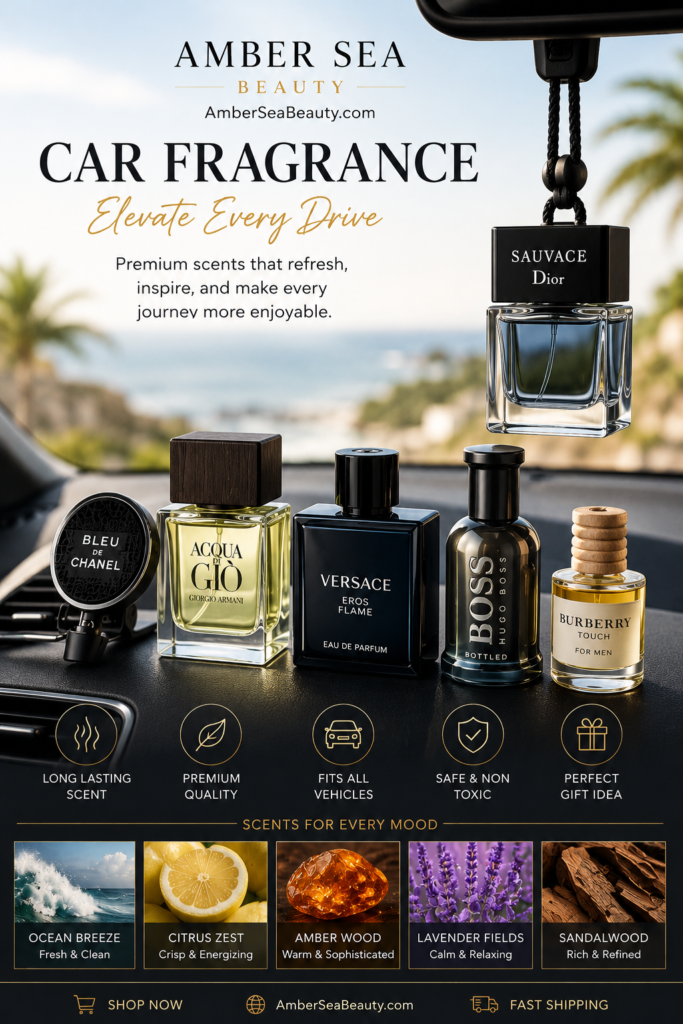
CATEGORY: Car Fragrance
One of the most common questions about car fragrance is also one of the most difficult to answer precisely:
How long should it last?
A hanging freshener may remain noticeable for days or weeks.
A vent clip may perform very differently depending on how often the climate system is used.
A gel can shrink slowly for weeks but become much weaker before the material is completely gone.
An oil diffuser may last a long time when used conservatively and disappear surprisingly quickly if the cap is repeatedly saturated.
A spray bottle can remain useful for months because it releases fragrance only when the driver chooses to apply it.
This means there is no meaningful universal lifespan for “car fragrance.”
Longevity depends on the product format, the fragrance formula, the amount of scented material, vehicle temperature, airflow, cabin size, parking conditions, intensity settings, and even the driver’s perception of the scent.
The same product can last considerably longer in one car than another.
Understanding why helps buyers compare products more intelligently.
Instead of judging a fragrance only by a claim such as “lasts up to several weeks,” it is more useful to understand what determines those weeks and whether the fragrance remains pleasant and noticeable throughout them.
A product that technically lasts sixty days but becomes almost impossible to smell after the first two weeks may be less satisfying than one that performs consistently for thirty days.
Longevity is therefore not simply about how slowly the product disappears.
It is about how long it produces a fragrance level you actually enjoy.
Car Fragrance Longevity Is Not an Exact Science
Fragrance products contain volatile aromatic materials.
They gradually move from the product into the surrounding air.
That is how the cabin becomes scented.
As those volatile materials are released, the fragrance source is gradually consumed.
The speed of this process changes according to conditions.
Heat usually accelerates evaporation.
Strong airflow can increase fragrance release.
Greater exposed surface area can intensify diffusion.
Open windows exchange fragranced cabin air with outside air.
A product in a rarely driven shaded vehicle may behave very differently from the same product in a daily-driven car parked in direct Mediterranean summer sun.
This is why manufacturer duration figures should usually be understood as estimates under particular conditions rather than guaranteed countdowns.
“Up To” Is an Important Phrase
Many fragrance products describe longevity using language such as:
“Up to 30 days.”
“Up to 60 days.”
“Long-lasting fragrance.”
These statements do not necessarily mean the fragrance will remain equally strong every day.
The scent may begin powerfully.
Settle into a moderate phase.
Then become gradually weaker.
A product may still contain some detectable fragrance at the end of the stated period without producing the same cabin atmosphere it created at the beginning.
For practical shopping purposes, the useful question is therefore:
How long does it remain pleasant enough that I would choose to keep using it?
Fragrance Strength and Fragrance Longevity Often Trade Against Each Other
In many passive products, stronger diffusion means faster consumption.
An adjustable gel opened fully may smell stronger.
It may also dry more quickly.
A vent clip set to maximum output may distribute more fragrance.
The refill may be depleted sooner.
A hanging freshener fully removed from protective wrapping may give an impressive initial scent.
It may fade faster than one gradually exposed.
A bottle diffuser with a heavily saturated wooden cap can become powerful immediately.
It may also consume liquid much faster.
This creates one of the most useful principles in the category:
Maximum strength is rarely maximum value.
Moderate Fragrance Often Lasts Longer and Feels Better
A lower release rate can provide two benefits.
The product lasts longer.
The cabin remains more comfortable.
Car interiors are small enough that relatively modest fragrance output may be sufficient.
This is especially true in compact vehicles.
Using a product at full intensity simply because the control allows it may waste fragrance without improving the driving experience.
Heat Is One of the Biggest Enemies of Longevity
Cars can become extremely hot when parked in sunlight.
The cabin temperature may rise far above the outdoor air temperature.
This can dramatically increase evaporation from:
Gels.
Hanging fresheners.
Oil diffusers.
Vent cartridges.
Solid fragrance materials.
A product may therefore last substantially less time in summer than in winter.
This is not necessarily a manufacturing defect.
The environment has changed the release rate.
Summer Performance Can Be Very Different From Winter Performance
Imagine the same gel freshener used in February and August.
In winter:
The cabin begins cold.
The fragrance evaporates slowly while parked.
The product may remain noticeable for a long period.
In summer:
The cabin sits in intense heat for hours.
The gel continuously releases more fragrance.
The product may smell much stronger when the door is opened.
It may shrink faster.
The same product can therefore produce two very different lifespans.
Parking in Shade Can Extend Practical Longevity
A car parked in:
A garage.
Underground parking.
Shade.
A covered parking structure.
May maintain lower and more stable interior temperatures.
Fragrance products may evaporate more slowly.
A vehicle parked every day in direct sun may consume the same product much faster.
Parking environment is therefore part of fragrance economics.
Airflow Can Increase Consumption Too
Vent clips are the clearest example.
A driver who uses strong climate-control airflow for several hours every day exposes the fragrance cartridge to much more moving air.
Another driver may use low fan speed for short journeys.
The same refill may not last equally long.
Higher airflow may provide stronger scent but can increase fragrance release.
Open Windows Change the Equation
Driving with windows open does two things.
It removes fragranced air from the cabin.
It introduces fresh outside air.
The fragrance source then continues releasing scent into an environment that is constantly being exchanged.
This may make the product seem weaker.
It can also increase the temptation to open the fragrance further or add more products.
Once the windows close, the resulting fragrance level may suddenly become excessive.
Cabin Size Affects How Hard the Product Must Work
A small car requires relatively little fragrance to create a noticeable concentration.
A large SUV or van contains more air.
The same product may seem softer.
A driver of a larger vehicle may therefore use:
Higher vent settings.
More exposed gel.
More frequent spray applications.
A larger diffuser.
Potentially more than one fragrance source.
This can reduce practical product lifespan compared with a compact vehicle.
A Small Cabin Can Make a Product Last Longer
If one low-setting vent clip already provides sufficient scent in a small car, there is no reason to increase output.
Lower use can extend refill life.
The same applies to:
Gel openings.
Diffuser saturation.
Spray dosage.
Hanging freshener exposure.
Vehicle size should influence how aggressively the fragrance is used.
Your Nose Can Make a Product Seem Shorter-Lived Than It Really Is
One of the most important factors in perceived longevity has nothing to do with product evaporation.
It is olfactory adaptation.
When you experience the same scent continuously, your brain gradually pays less attention to it.
The fragrance may still be present.
You simply notice it less.
This is why a driver may say:
“The air freshener is finished.”
Then a passenger enters and immediately says:
“Your car smells strongly of vanilla.”
Nose Adaptation Encourages Overuse
If the driver assumes the product has faded, they may:
Open the gel fully.
Add another vent clip.
Spray the cabin repeatedly.
Re-saturate the diffuser.
Install a second hanging freshener.
The result can become extremely strong for passengers even though the driver barely notices the increase.
Understanding adaptation prevents this cycle.
Test Fragrance After Time Away From the Vehicle
A better way to judge whether the product is genuinely fading is to leave the vehicle for several hours.
Then return and notice the first impression.
If you detect the fragrance clearly when opening the door, the product is still working.
If the cabin smells almost neutral even after a long period away, the fragrance may genuinely be near the end of its useful life.
Passenger Feedback Can Be Surprisingly Useful
Someone who does not ride in the vehicle every day has not adapted to the scent.
Ask:
“Can you still smell the fragrance?”
Their answer may be more informative than your own.
This is particularly valuable before increasing intensity or replacing a refill early.
Hanging Fresheners Usually Fade Gradually
Traditional hanging fresheners often begin strongly.
The fragrance gradually decreases as volatile material leaves the scented card or fiber.
The visual product may look exactly the same after the scent has largely disappeared.
Appearance therefore tells you very little about remaining performance.
The smell itself is the meaningful indicator.
Gradual Unwrapping Can Improve Hanging-Freshener Longevity
If a product is designed to remain partially inside its wrapper, follow that system.
Expose a small portion first.
As the scent weakens, expose more.
This controls release.
It can help avoid:
An excessively strong beginning.
A very weak ending.
The objective is a more even fragrance curve.
Full Exposure Creates a Stronger but Often Shorter Experience
Removing all protective packaging immediately exposes maximum scented surface.
The first few days may smell impressive.
But fragrance may evaporate more rapidly.
Whether this is preferable depends on your priorities.
Some drivers want high initial impact.
Others prefer longer moderate performance.
Vent Clips Have Highly Variable Lifespans
Vent clip longevity depends heavily on climate-control habits.
Consider two drivers using the same refill.
Driver A:
Twenty-minute commute.
Low fan speed.
Moderate climate use.
Driver B:
Two hours daily.
High fan speed.
Continuous air-conditioning.
Driver B may use the fragrance substantially faster.
This is why real-world vent clip lifespan can vary so much.
Adjustable Vent Clips Allow Better Longevity Management
If the scent is strong enough on the lowest setting, leave it there.
Increasing output gives no practical benefit if the cabin already smells good.
The lower setting may extend refill life.
It also reduces the chance of fragrance fatigue.
A Vent Clip Can Seem Weak When the Fan Is Off
Do not assume the refill is finished merely because the parked car has little fragrance.
Activate the ventilation system under normal conditions.
If scent returns, the cartridge still contains usable fragrance.
The product is designed to work with airflow.
Some Vent Refills Visually Indicate Depletion
Liquid-containing vent products may allow you to see the remaining fragrance.
This can be useful.
But visible liquid does not always correspond perfectly with fragrance strength.
The composition of the remaining liquid may change as more volatile components evaporate.
Judge both the product level and actual scent performance.
Gel Fresheners Often Show Their Consumption Physically
Gel products can shrink visibly.
This makes it easier to see that fragrance material has been used.
However, a small amount of gel remaining does not necessarily mean it will continue performing strongly.
The product may still smell faintly when examined close up while producing little noticeable cabin fragrance.
Replacement should therefore depend on real use rather than whether every last piece of gel has disappeared.
Adjustable Gel Openings Can Extend Useful Life
Begin small.
Increase exposure gradually as the product ages.
This can help maintain a more consistent fragrance experience.
For example:
Early life — small opening.
Middle life — medium opening.
Later life — wider opening.
Rather than:
Day one — fully open.
Week two — nearly exhausted.
Solid Fragrances Can Be Harder to Judge Visually
Some solid fragrance inserts barely change appearance.
They may remain intact even after the scent has weakened considerably.
This is particularly common with polymer or resin-type fragrance systems.
The fact that the insert still exists physically does not mean it remains effective.
Replace Solid Fragrance Based on Cabin Performance
Ask:
Does the car still smell noticeably pleasant after being closed?
Does airflow reactivate the scent?
Can passengers still detect it?
If not, replacement may be appropriate even if the solid insert looks unchanged.
Oil Diffusers Have Some of the Most Variable Longevity
Bottle diffusers can last a long time.
Or disappear rapidly.
Much depends on how they are used.
A driver who lightly wets the wooden cap only when necessary may consume liquid slowly.
A driver who turns the bottle over during every journey may saturate the cap repeatedly and empty the reservoir much faster.
The Liquid Level Makes Oil-Diffuser Consumption Easy to Monitor
Clear bottles allow you to see the amount remaining.
This can be useful for identifying your normal consumption rate.
If a bottle usually loses a small amount each week and suddenly drops significantly overnight, inspect for a leak.
Unexpectedly rapid loss should never simply be assumed to be normal evaporation.
Cap Saturation Determines Much of the Oil Diffuser’s Strength
A dry cap releases less fragrance.
A recently wetted cap releases more.
You can therefore regulate practical longevity partly through how frequently the cap is refreshed.
Do not automatically wet it because the scent seems softer after one short drive.
Allow time.
Repeated Saturation Can Waste a Large Amount of Fragrance
More liquid in the cap does not necessarily mean a better cabin.
Once the absorbent material is sufficiently scented, extra liquid may:
Drip.
Leak.
Evaporate excessively.
Create overwhelming scent.
Shorten bottle life.
Minimal effective saturation usually works better.
Oil Diffusers Need Additional Heat Monitoring
In hot weather, the cap may continue releasing fragrance strongly without being manually refreshed.
The bottle may therefore need much less intervention during summer.
If you maintain a winter tilting routine in August, you may use far more fragrance than necessary.
Spray Fragrance Has a Completely Different Longevity Model
A spray bottle does not continuously evaporate into the car while it remains closed, assuming it is stored safely and properly sealed.
Its lifespan is determined mainly by:
Bottle volume.
Number of sprays per application.
Frequency of use.
This makes it easier to control economically.
A driver using two sprays twice a week may keep one bottle for a very long time.
Another using several sprays every morning may consume it quickly.
Spray Longevity Should Be Measured in Applications, Not Days
For passive products, days or weeks make sense.
For sprays, a better question is:
How many useful applications does the bottle provide?
If a bottle offers hundreds of sprays, occasional use can make it very economical.
This is one reason sprays suit rarely driven vehicles particularly well.
Sprays Do Not Waste Fragrance While the Car Is Unused
A passive gel keeps diffusing during a two-week holiday.
A hanging freshener keeps evaporating.
A vent cartridge remains exposed to cabin heat.
A spray bottle remains closed.
For cars used infrequently, this can make spray the most efficient format.
Powered Diffusers Depend on Their Operating Mode
Electronic fragrance devices may use:
Timed bursts.
Continuous output.
Multiple strength modes.
Motion activation.
Automatic cycles.
Battery or USB power.
Longevity therefore depends on settings.
A low programmed output can make one cartridge last much longer than continuous maximum diffusion.
Smart Control Can Improve Fragrance Efficiency
If the device operates only while the vehicle is occupied or powered, less fragrance may be wasted while the car is parked.
This can improve practical efficiency.
The advantage must be weighed against:
Device cost.
Refill cost.
Charging.
Replacement compatibility.
Technology is useful only if it suits the driver’s routine.
Cartridge Size Alone Does Not Tell You Longevity
A larger cartridge may contain more fragrance.
But a more aggressive diffuser may also release it faster.
A smaller cartridge in a low-output system can potentially last longer.
Compare the whole delivery system, not only milliliters or physical size.
Fragrance Family Can Affect Perceived Longevity
Some fragrance styles seem to disappear faster because their most noticeable notes are lighter and more volatile.
Bright citrus can feel very immediate but sometimes appear to fade faster.
Woods, amber, musk, vanilla, and leather-style compositions may seem more persistent.
This does not mean every woody fragrance lasts longer than every citrus fragrance.
Formulation matters greatly.
But fragrance character can influence perceived duration.
Citrus Often Gives a Strong First Impression
Lemon.
Lime.
Grapefruit.
Bergamot.
These can feel bright and obvious when first released.
As the most sparkling elements dissipate, the fragrance may seem weaker.
A citrus fragrance supported by:
Woods.
Musk.
Tea.
Amber.
Can feel more persistent than a simple sharp citrus profile.
Woody Fragrance Often Feels Stable Over Time
Cedar.
Sandalwood.
Vetiver.
Dry woods.
These create more substantial base character.
They can remain noticeable even after lighter notes fade.
This makes woody compositions attractive for continuous car fragrance.
Amber and Musk Can Feel Especially Persistent
These fragrance styles often create a longer-lasting background impression.
They are useful when you want a signature cabin scent.
But persistence should not be confused with using too much.
A low-level amber fragrance can be pleasant.
A heavily saturated amber cabin can become exhausting.
Vanilla Can Linger Strongly
Sweet vanilla-style fragrance may remain noticeable on cabin materials after the active product is removed.
This can make switching to a new fragrance more difficult.
Ventilation and cleaning may be useful before introducing an unrelated scent.
Fragrance Can Remain in Soft Interior Materials
Carpets.
Fabric seats.
Headliners.
Boot liners.
Soft furnishings.
These can absorb some fragrance from the surrounding air or from sprays specifically designed for fabric.
A cabin may retain traces of a fragrance after the original freshener has been removed.
This is especially noticeable with strong sweet or musky scents.
Changing Fragrance Families Works Better After a Neutral Period
Suppose you have used strong vanilla for several months and want marine fragrance.
Installing the marine product immediately can create:
Marine + residual vanilla.
Rather than a clean marine scent.
Remove the old fragrance.
Ventilate.
Clean where appropriate.
Allow the cabin to become more neutral.
Then introduce the new product.
Similar Fragrance Families Are Easier to Transition Between
Leather to woods.
Citrus to marine.
Amber to vanilla.
Tea to bergamot.
These transitions usually create less obvious conflict because the fragrance families relate.
Switching from a very strong gourmand scent directly to a crisp aquatic fragrance is more likely to reveal lingering residue.
Storage Matters for Unused Car Fragrance Products
If you buy several refills or fragrances at once, store them properly.
The correct storage conditions depend on the product.
Generally, fragrance products should remain:
Closed.
Protected from excessive heat.
Protected from direct sunlight.
Away from children and pets.
According to manufacturer instructions.
Improper storage can reduce quality before the product ever reaches the car.
A Hot Glove Compartment Is Not Always Ideal Storage
The interior of a parked vehicle can become extremely hot.
Keeping spare fragrance bottles or pressurized sprays permanently in the car may conflict with product safety instructions.
Always check the label.
Some products are better stored elsewhere until needed.
Pressurized Aerosol Products Require Particular Attention
Aerosol containers commonly include heat and storage warnings.
These instructions should be followed exactly.
A vehicle interior can experience temperatures high enough to make inappropriate storage unsafe.
Never treat a car as ordinary room-temperature storage.
Spare Oil Refills Should Remain Securely Closed
Fragrance liquid can leak during transport or storage.
Keep replacement bottles upright where required.
Make sure caps are tight.
Do not leave them loose among objects that can strike or puncture them.
Fragrance Packaging Protects the Product Before Use
Do not open a replacement hanging freshener or cartridge months before installation.
Sealed packaging helps preserve volatile fragrance material.
Once opened, evaporation begins.
Open the product when you are ready to use it.
Buying in Bulk Only Makes Sense if Storage Is Appropriate
A discounted multipack can offer value.
But if several products sit for years in poor storage conditions, the saving may be meaningless.
Buy quantities you are likely to use within a reasonable period.
Fragrance products are not necessarily permanent inventory.
Refill Availability Matters More Than Extreme Longevity
A reusable diffuser is convenient only if replacement fragrances can still be purchased easily.
When evaluating long-term value, consider:
Refill price.
Availability.
Scent variety.
Shipping.
Compatibility.
A holder that lasts indefinitely is not very useful if the cartridges become impossible to obtain.
Disposable Products Offer Independence
A simple hanging freshener or gel does not depend on a proprietary system.
When it finishes, you can buy almost any replacement.
This flexibility is valuable even if the individual product lifespan is shorter.
Reusable Systems Can Still Offer Better Long-Term Convenience
A high-quality permanent vent holder or bottle diffuser may become part of the vehicle.
The user only changes fragrance inserts or liquid.
This reduces repeated installation decisions.
The value depends on whether the system remains supported and enjoyable.
Replacement Timing Should Be Based on Performance
Do not replace too early.
Do not keep a dead product indefinitely.
The ideal replacement moment is when:
The fragrance is no longer noticeable enough to provide the desired effect.
Increasing an adjustable setting no longer helps.
The active material is visibly depleted.
The refill is approaching empty.
The product has become damaged.
There is no universal calendar.
A Weak Product Is Not Always Finished
Before replacing it, check:
Is the climate system off?
Has the weather become colder?
Have you become adapted to the smell?
Is the gel opening too small?
Has the oil cap dried?
Is the product positioned poorly?
Sometimes a simple adjustment restores performance.
A Strong Product Is Not Necessarily “Fresh”
The opposite is also true.
A fragrance product can remain extremely strong but become unpleasant because the user is tired of it.
Technically, it still has life.
Practically, it may be time to change.
Useful longevity includes enjoyment.
Fragrance Fatigue Is Different From Olfactory Adaptation
Adaptation means you stop noticing a scent because your sensory system becomes accustomed to it.
Fragrance fatigue means you still notice it but no longer enjoy it.
A product that lasts months can become tiring before it is empty.
This matters when choosing very distinctive fragrances.
Versatile Scents Often Have Better Practical Longevity
A moderate woody citrus or clean musk may remain enjoyable for longer than an intensely sweet cherry or coffee scent.
Not because the product evaporates more slowly.
Because the user does not tire of it as quickly.
Practical value includes psychological longevity.
Signature Scents Can Solve the Fatigue Problem for Some Drivers
If you genuinely love one fragrance, repeatedly buying the same scent can simplify the category.
You know:
How strong it is.
How long it lasts in your car.
Which setting works.
How it behaves in summer.
How it behaves in winter.
This predictability can be more valuable than constant experimentation.
Rotation Works Better for Drivers Who Become Bored Easily
Other people enjoy novelty.
For them, shorter-lasting or easily replaceable formats may actually be better.
A product lasting six months is not advantageous if you want a new scent every four weeks.
Longevity should match personality.
Seasonality Can Create a Natural Replacement Schedule
Instead of asking whether one fragrance can last as long as possible, some drivers prefer changing scent several times per year.
Spring.
Summer.
Autumn.
Winter.
A refill that lasts one or two months may fit this approach perfectly.
Maximum longevity is not always the objective.
Product Cost Should Be Calculated Over Time
Imagine Product A costs €4 and lasts roughly two weeks under your conditions.
Product B costs €10 and lasts roughly six weeks.
Product C requires a €20 reusable holder but €5 refills that last a month.
Which is cheapest?
The answer depends on actual lifespan and how long you plan to use the system.
A simple monthly or annual calculation is more useful than comparing shelf prices.
A Higher Initial Price Can Sometimes Reduce Long-Term Cost
Reusable holders may become economical after several refill cycles.
But this is not guaranteed.
Premium refills can be expensive.
Before buying a system, check ongoing costs rather than only the attractive holder.
Cheap Disposable Products Can Also Offer Excellent Value
If an inexpensive hanging freshener gives you exactly the scent and duration you want, there is no reason to assume a sophisticated diffuser is financially superior.
Value is the relationship between:
Price.
Performance.
Convenience.
Enjoyment.
Not simply sophistication.
Fragrance Consumption Should Match Vehicle Usage
A car driven two hours every day benefits from:
Reliable continuous fragrance.
Convenient replacement.
A comfortable long-term scent.
A weekend car may benefit more from:
Spray.
A low-release passive product.
A removable diffuser.
The best value depends on how much the vehicle is actually occupied.
A Passive Product in an Unused Car Is Still Being Consumed
This is easy to forget.
The car sits for ten days.
The gel continues diffusing.
The hanging freshener continues evaporating.
The oil diffuser continues losing fragrance.
If the vehicle is rarely used, continuous products may provide poor value unless you specifically want the car to smell fragranced whenever it is opened.
Removable Products Can Extend Life in Occasional-Use Vehicles
Some fragrance systems can be closed, capped, or removed between periods of use.
If the manufacturer permits this, it may reduce unnecessary evaporation.
A spray naturally solves the problem because it stays sealed until activated.
Cleaning Can Make an Existing Fragrance Seem Stronger
Sometimes the product is not weak.
The cabin is simply carrying competing odors.
After cleaning:
Rubbish removed.
Carpets vacuumed.
Food eliminated.
Pet hair removed.
Interior ventilated.
The existing fragrance may suddenly become much clearer.
This is another reason fragrance and cleanliness should be considered together.
Odor Sources Make Drivers Use Too Much Fragrance
If a damp smell remains, the driver may increase the gel opening.
Then add spray.
Then install another freshener.
But the underlying odor remains.
Once the cause is finally removed, the cabin may become overwhelmingly fragranced because several products are still active.
Address odor first.
HVAC Odors Can Make Vent Fragrance Seem Ineffective
A vent clip cannot necessarily compete successfully with an unpleasant smell coming from the ventilation system.
If the odor appears mainly when the fan begins, investigate the HVAC system.
Do not judge the fragrance refill simply by its inability to hide a maintenance issue.
A Fragrance Product Should Not Be Expected to Perform Two Jobs Unless It Is Designed to
Fragrance adds scent.
Some products may also claim odor-neutralizing capabilities.
Those claims should be evaluated according to the specific product.
Do not assume every fragrance freshener actively removes odor.
Masking and neutralizing are different functions.
Product Placement Can Improve Longevity
Placing a fragrance directly in intense sunlight or hot airflow can accelerate evaporation.
A more moderate location may preserve it.
However, placement must still allow enough air movement for the scent to reach the cabin.
The goal is balance.
Avoid Heat Sources Unless the Product Is Designed for Them
Do not place ordinary fragrance directly against:
Hot vents.
Heated surfaces.
Electronic equipment.
Areas exposed to extreme sunlight.
Simply to make the fragrance stronger.
You may shorten product life or create other problems.
Hiding a Product Too Completely Can Make It Seem Weak
The opposite mistake is placing a passive fragrance where almost no air circulates.
A sealed glovebox may contain a strong fragrance while the main cabin smells neutral.
Position should allow appropriate diffusion.
Under-Seat Placement Can Work for Certain Products
Some fragrance products are specifically designed for discreet under-seat placement.
This can provide:
Hidden fragrance.
Moderate airflow.
No dashboard clutter.
Only use a product this way if its design and instructions permit it.
Nothing should interfere with seat mechanisms, electrical connections, or foot movement.
Boot Placement Can Be Useful for Large Vehicles
In SUVs, estates, or vehicles carrying sports equipment or pets, a fragrance source in the luggage area can provide local scent.
But if the objective is to fragrance the front cabin, rear placement may not be sufficient.
Again, placement should match purpose.
Product Condition Affects Performance
A cracked holder.
Loose vent clip.
Damaged seal.
Dried diffuser cap.
Leaking bottle.
These can all change fragrance behavior.
Inspect products occasionally.
A fragrance system should not simply be ignored until it disappears.
Replace Damaged Products Even if Fragrance Remains
Safety and interior protection matter more than extracting the final days of fragrance.
Remove a product if it:
Leaks.
Cracks.
No longer attaches securely.
Sheds material.
Interferes with controls.
Has damaged packaging that exposes contents incorrectly.
Leakage Can Make a Product Appear Extremely Strong
An oil diffuser that suddenly smells ten times stronger may not have “activated beautifully.”
It may be leaking.
Inspect the product.
Check nearby surfaces.
Unexpected fragrance intensity deserves attention.
A Sudden Loss of Fragrance Can Also Signal a Problem
If a bottle empties unusually quickly or a gel dries dramatically after one very hot day, environmental conditions may have changed.
Extreme temperatures can significantly affect performance.
This is useful information for the next replacement.
Keep Track of Real Lifespan for Your Own Vehicle
After using several products, you can build your own much more useful estimate.
Write the installation date.
Notice when the scent becomes too weak.
Record the approximate duration.
After a few cycles, you may learn:
This vent refill lasts me about five weeks in winter and three in summer.
That is more useful than a generic package claim.
Personal Tracking Helps Compare Value
If you are choosing between two products, calculate:
Price ÷ actual useful weeks.
This gives a rough weekly cost.
You can then add qualitative factors:
Which scent do I prefer?
Which is easier to use?
Which looks better?
Which requires less maintenance?
Value becomes much clearer.
The Longest-Lasting Product Is Not Automatically the Best Purchase
Suppose one product lasts twelve weeks but becomes weak and unpleasant after week four.
Another lasts six weeks and smells excellent throughout.
Which offers more value?
For many drivers, the second.
Longevity should be judged alongside consistency.
Consistency Is an Underrated Quality
The ideal product would not produce:
Week one — overwhelming.
Week two — perfect.
Week three — moderate.
Week four — almost nothing.
A more gradual decline feels better.
Adjustable systems help compensate for natural fading.
Intensity Controls Can Extend the Useful Middle Period
With gel or vent products:
Begin low.
Increase slightly as fragrance weakens.
This can keep the cabin closer to the desired scent level.
Instead of accepting the product’s natural decline, the user actively manages it.
Spray Naturally Avoids the Decline Problem
Each spray application begins fresh.
The bottle gradually contains less liquid, but each dose can remain similar until the bottle is almost empty.
This gives spray excellent consistency on an application-by-application basis.
Bottle Diffusers Can Be Refreshed Without Replacing the Whole Product
If the cap dries but liquid remains, a brief refresh can restore fragrance.
This makes oil diffusers highly adjustable.
The risk is overdoing it.
A good routine develops through experience.
Refilling Too Soon Can Waste Remaining Product
Do not refill a reusable bottle simply because the scent has weakened if substantial fragrance remains.
The cap may need refreshing.
The temperature may have changed.
The nose may have adapted.
Identify the reason first.
Refilling Too Late Can Leave Residual Mixed Fragrance
If switching scents, completely emptying the old bottle and following the system’s cleaning instructions may prevent undesirable blending.
Porous caps may still retain old fragrance.
Different fragrance systems handle this differently.
Some Diffuser Components Are Consumables Too
A reusable glass bottle may last years.
The wooden cap, wick, or cartridge may not.
Porous materials can:
Become saturated with old fragrance.
Collect dust.
Change diffusion behavior.
Require replacement.
A “refillable” product does not necessarily mean every component lasts forever.
Maintenance Is Usually Minimal but Still Useful
During routine car cleaning:
Inspect the fragrance.
Wipe dust from holders where appropriate.
Check clips.
Check bottles.
Check liquid levels.
Check gel condition.
This takes seconds and keeps the product functioning properly.
Do Not Wash or Alter Components Unless Instructions Permit It
A fragrance holder may contain delicate membranes or porous materials.
Cleaning methods that seem harmless can damage performance.
Follow manufacturer guidance.
Avoid solvents and improvised modifications.
Never Enlarge Fragrance Openings to Make a Product Stronger
Drilling holes.
Removing membranes.
Puncturing cartridges.
Cutting containers.
These can create uncontrolled release.
Leaks.
Spills.
Premature evaporation.
The product should be used as designed.
Combining Products Usually Reduces Overall Value
If one fragrance source is too weak, adding several more may seem logical.
But the combined scents may conflict.
You also consume several products simultaneously.
A better solution may be choosing one stronger or more appropriate format.
One Well-Matched Product Can Outperform Several Weak Ones
Large SUV + tiny hanging card may be a poor match.
Instead of installing four cards, a stronger vent or diffuser system may provide better distribution.
The format should match cabin size.
Different Zones Can Justify Multiple Products in Very Large Vehicles
A large multi-row vehicle may genuinely need more than one fragrance source.
If so:
Use the same scent.
Keep each source at low intensity.
Place them strategically.
Avoid creating a heavily fragranced front and rear simultaneously.
Replacing Fragrance Is a Good Time to Clean the Holder Area
Vent clips can leave dust around the vent.
Gel containers sit in cup holders.
Bottle diffusers may leave cords or attachment points.
When replacing:
Remove the old product.
Clean the area appropriately.
Inspect for residue.
Then install the new one.
Never Install a New Liquid Diffuser Over Existing Oil Residue
If the previous bottle leaked slightly, clean the area before installing another.
Repeated exposure can worsen staining or material damage.
A premium fragrance experience begins with a properly maintained interior.
Storage After Opening Can Be Difficult for Passive Products
If you remove a half-used hanging freshener or gel, it may continue releasing fragrance during storage.
Unless the product provides a resealable system, preserving it for later may be difficult.
This is another advantage of cartridge systems and sprays that can be sealed.
Seasonal Products Benefit From Resealable Storage
If you want to switch from winter amber to summer citrus and return to the amber later, a product designed to close securely makes this easier.
Otherwise, the winter fragrance may continue evaporating in storage until nothing remains.
Spray Collections Are Especially Easy to Rotate
Close the bottle.
Store according to instructions.
Use another scent.
Return months later.
This gives spray users enormous seasonal flexibility.
Car Fragrance Should Never Be Stored Where It Can Interfere With Driving
Spare bottles should not roll around:
Footwells.
Pedal areas.
Loose door pockets.
Open consoles.
Secure storage matters even when the product is not active.
Replacement Fragrance Should Be Kept Away From Children and Pets
Refills may contain concentrated fragrance material.
They should remain securely packaged.
Do not allow them to become toys or chewable objects.
Product Instructions Override General Advice
Different fragrance systems use different formulations and materials.
If a specific manufacturer says:
Keep upright.
Do not expose to heat.
Use only in a vent.
Do not place on fabric.
Remove an internal seal.
Do not remove another membrane.
Those instructions should be followed.
General fragrance principles cannot replace product-specific directions.
How to Make Hanging Fresheners Last Better
Use gradual exposure if designed for it.
Avoid unnecessary direct heat.
Do not use several at once.
Allow scent to fade naturally before exposing more.
Keep the product hanging freely without touching surfaces.
Replace when cabin fragrance genuinely becomes too weak.
How to Make Vent Clips Last Better
Start at low output.
Use only as much fragrance release as necessary.
Do not leave the vent unnecessarily on maximum solely for fragrance.
Avoid installing multiple units before testing one.
Check performance with normal climate usage before assuming the refill is empty.
How to Make Gel Products Last Better
Begin with a small opening.
Increase gradually.
Keep the container stable.
Avoid excessive heat where possible.
Close or reduce the opening during very hot periods if appropriate.
Judge the product by cabin performance rather than gel size alone.
How to Make Solid Fragrances Last Better
Position them according to instructions.
Avoid extreme heat.
Use adjustable housings conservatively if available.
Do not assume the insert is finished just because your nose has adapted.
Test after time away from the vehicle.
How to Make Oil Diffusers Last Better
Do not oversaturate the cap.
Tilt only when needed and according to instructions.
Keep the bottle secure.
Monitor liquid level.
Protect it from excessive heat where required.
Check for leaks.
Use compatible refill liquids only.
How to Make Sprays Last Better
Use the minimum effective number of sprays.
Apply only when needed.
Keep the vehicle clean so fragrance does not have to compete with odor.
Store the bottle safely according to label instructions.
Avoid spraying the whole cabin repeatedly when one or two applications are sufficient.
How to Make Powered Systems Last Better
Use lower output modes when they provide enough scent.
Choose timed rather than continuous release if available and suitable.
Turn the system off when fragrance is unnecessary if the design allows.
Keep cartridges sealed until installation.
The Best Longevity Strategy Is Often Simply Using Less
This sounds obvious, but it solves many problems.
Lower fragrance output can mean:
Longer product life.
Less passenger discomfort.
Lower refill cost.
Reduced fragrance fatigue.
A cleaner cabin atmosphere.
Cars rarely need as much fragrance as users initially assume.
A Mild Fragrance Is Easier to Increase Than a Strong One Is to Remove
Start low.
Wait.
Evaluate.
Increase.
This applies to nearly every product format.
It is one of the simplest ways to improve both longevity and enjoyment.
Keep the Cabin Clean to Make Fragrance More Efficient
A clean vehicle needs less added scent to smell pleasant.
Regularly remove:
Food packaging.
Wet materials.
Pet debris.
Dust.
Old fragrance products.
Clean mats and suitable surfaces.
Ventilate.
The fragrance can then perform as a finishing touch rather than an odor-covering weapon.
Use One Main Fragrance Family at a Time
A coherent scent is easier to notice at lower intensity.
Several competing scents often encourage stronger use because no individual fragrance is clear.
One fragrance direction gives a cleaner result.
Seasonal Adjustment Can Save Product
Summer:
Reduce exposure.
Winter:
Increase only if necessary.
This prevents unnecessary consumption when heat naturally increases diffusion.
Understand When the Product Is Actually Finished
A fragrance is effectively finished when it no longer produces a useful result under normal conditions.
Not when:
You temporarily stop noticing it.
The calendar reaches an advertised number.
The gel is slightly smaller.
The bottle looks less full.
Test real performance.
Replace It When the Experience No Longer Justifies Keeping It
If the product:
Barely scents the cabin.
Smells stale.
Has become damaged.
Is leaking.
No longer attaches safely.
Or you simply no longer enjoy the fragrance.
Replace or remove it.
Getting the absolute final trace of fragrance out of a product is not worth compromising the cabin experience.
Car Fragrance Longevity Is Really About Efficiency
A good product gives you an appropriate amount of scent for an appropriate amount of time.
Not necessarily the longest possible time.
Not necessarily the strongest possible fragrance.
Efficiency means:
Little waste.
Comfortable intensity.
Predictable performance.
Reasonable replacement cost.
A scent you continue enjoying.
The Best Product Is the One Whose Lifespan Fits Your Routine
Daily commuter:
A long-lasting vent clip, gel, solid, or refillable diffuser may be ideal.
Occasional driver:
Spray can be highly efficient.
Large family vehicle:
A stronger controlled passive system may make sense.
Small city car:
One low-output product may last surprisingly well.
Fragrance enthusiast:
Refillable systems or sprays provide flexibility.
There is no single winner.
Compare Useful Weeks, Not Marketing Weeks
When buying repeatedly, remember how long the previous product actually satisfied you.
If a product claims sixty days but you replace it after twenty-five because it becomes too weak, its useful life for you is twenty-five days.
That is the number that matters.
Personal Experience Eventually Becomes More Reliable Than General Estimates
After several months, you will know your vehicle.
You will learn:
How quickly heat consumes fragrance.
Which formats work best.
Which scents become tiring.
Which vent setting is enough.
How long a gel lasts.
How frequently an oil cap needs refreshing.
That knowledge makes future buying much easier.
Longevity Should Never Become the Only Reason to Choose a Car Fragrance
A product could last a year and still be the wrong choice if you dislike the fragrance.
Another may last only several weeks but make every drive more enjoyable.
Car fragrance is an experience product.
Efficiency matters.
Enjoyment matters too.
A Better Definition of “Long-Lasting” Car Fragrance
Instead of defining long-lasting as:
“The product remains physically present for the greatest number of days.”
A more useful definition is:
“The product continues creating a pleasant, appropriate fragrance at a useful intensity for a satisfying period relative to its price and maintenance.”
That definition accounts for real use.
Good Performance Is a Balance of Five Things
Strength
Enough fragrance to notice.
Consistency
No extreme first-day blast followed by rapid collapse.
Longevity
A reasonable useful period.
Control
Ability to adapt intensity where possible.
Value
A cost and maintenance level appropriate to the experience.
The strongest products usually balance all five rather than maximizing only one.
Car Fragrance Lasts Longest When the User Works With the Product Rather Than Against It
Do not fully expose a freshener simply because you can.
Do not run a vent clip at maximum if low is enough.
Do not soak an oil cap repeatedly.
Do not spray six times when two works.
Do not leave multiple fragrance sources fighting inside one small cabin.
Use the minimum amount that creates the result you enjoy.
That is the simplest longevity strategy available.
The Real Goal Is Not Making the Product Last Forever
Fragrance is consumable.
Eventually:
The gel shrinks.
The card fades.
The cartridge empties.
The oil disappears.
The spray bottle runs out.
That is normal.
A good car fragrance should be enjoyed while it lasts and replaced when its useful life ends.
The objective is not squeezing every possible day out of it.
It is getting a good experience throughout its lifespan.
Longevity Becomes Much Easier to Predict Once You Understand Your Own Car
Temperature.
Parking.
Cabin size.
Driving duration.
Airflow.
Season.
Fragrance preference.
These create your personal usage environment.
Once you understand them, generic product estimates matter less.
You know what actually happens in your vehicle.
The Best Car Fragrance Routine Is Simple
Keep the cabin clean.
Choose the correct format.
Begin at low intensity.
Monitor performance.
Adjust gradually.
Protect products from unsuitable heat or placement.
Store replacements correctly.
Watch for leaks or damage.
Allow for nose adaptation.
Replace only when the useful fragrance genuinely fades.
This approach improves both product life and cabin comfort.
Longevity Is Ultimately About Maintaining the Right Amount of Fragrance
Too little and the product seems pointless.
Too much and the cabin becomes uncomfortable while the product is consumed unnecessarily quickly.
Between those extremes is the ideal level:
Noticeable.
Pleasant.
Consistent.
Easy to live with.
That is where a car fragrance provides its best value.
Whether the product is a €3 hanging freshener, a refillable vent diffuser, a gel container, an oil bottle, or a premium cabin spray, the principle remains the same.
The fragrance should work at the rate the vehicle actually needs.
When strength, environment, product format, and user habits are matched properly, car fragrance can last longer without becoming weaker in purpose.
And that is the kind of longevity that matters most.
The End
AmberSeaBeauty.com
 Discover More From Our Family of Websites
 ZodiacBearing (Astrology, Tarot, Numerology, Angel Numbers & Spiritual Guidance)
 Velourana (Beauty, Makeup, Hair Care, Skincare & Beauty Tips)
 HavenBearing (Home, Living, Organization, Décor & Everyday Inspiration)
 PawBearing (Pet Care, Dog Breeds, Animal Health, Training & Pet Products)
 PsyCatherine (Notes From the Journal of a Psychologist on Real Life)