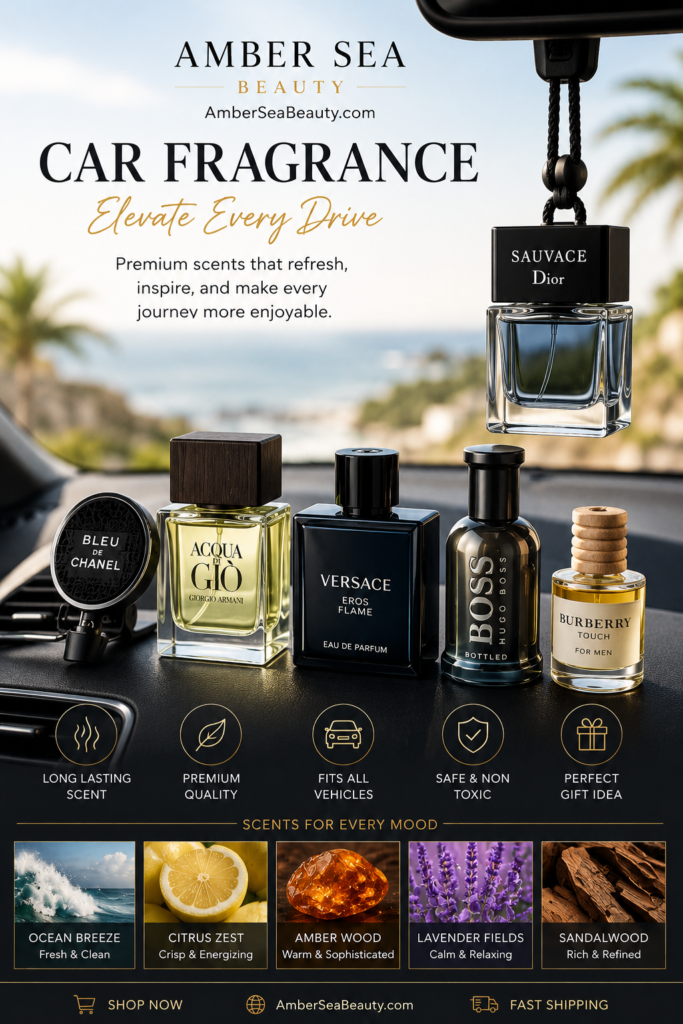
CATEGORY: Car Fragrance
A car fragrance does not necessarily need to remain the same throughout the year.
The atmosphere inside a vehicle changes considerably with the seasons.
Summer brings heat, stronger sunlight, air-conditioning, open windows, and higher fragrance evaporation.
Winter brings colder surfaces, heating, closed windows, heavier clothing, and a very different sensory environment.
Spring often feels lighter and fresher.
Autumn naturally lends itself to warmer, deeper fragrance profiles.
For this reason, a scent that feels perfect in January may seem too heavy in July, while a crisp marine fragrance that feels refreshing in August may seem slightly cold or thin in December.
Seasonal car fragrance is therefore not simply a marketing idea.
Temperature genuinely affects the way fragrance evaporates and is perceived inside the cabin.
The driver’s habits change too.
Climate control changes.
Ventilation changes.
The amount of time the vehicle spends closed in direct sunlight changes.
Even the emotional associations of fragrance change with the season.
Understanding these differences can help you choose scents that feel naturally suited to the time of year while also selecting the right strength and product format.
Why Temperature Changes the Way Car Fragrance Behaves
Fragrance reaches us because volatile aromatic materials enter the surrounding air.
Temperature affects that process.
In warmer conditions, many fragrance materials evaporate more readily.
This means a product may appear:
Stronger.
Faster.
More expansive.
Shorter-lived.
In colder conditions, evaporation may slow.
The same product may seem:
Softer.
Slower.
Less immediately noticeable.
Potentially longer-lasting.
The precise behavior depends on the formulation and delivery system, but the general principle explains why car fragrance can feel different from one season to another.
A Car Is an Especially Seasonal Fragrance Environment
A home interior usually experiences some temperature control.
A vehicle can experience dramatic changes.
A parked car may be cool in the morning and extremely hot several hours later.
In winter, the cabin can begin cold and then warm rapidly once the heating system starts.
This means car fragrance does not operate in a stable environment.
The fragrance source experiences repeated cycles of:
Heating.
Cooling.
Airflow.
Still air.
Direct sunlight.
Ventilation.
These conditions affect both strength and longevity.
Seasonal Fragrance Is About More Than Temperature
Our expectations also change.
A crisp citrus scent can feel naturally appropriate on a bright summer morning.
Warm amber may feel inviting on a dark winter evening.
Green fragrance can complement spring.
Dry woods and spice can fit the atmosphere of autumn.
These are associations rather than rules.
You can use vanilla in July or marine fragrance in December if that is what you enjoy.
Seasonal matching simply offers a framework for choosing among many available scents.
Spring Car Fragrance: Freshness Without Summer Sharpness
Spring often suggests renewal.
The weather becomes milder.
Windows may be opened more frequently.
The cabin feels less enclosed than during winter.
Heavy winter fragrances can begin to feel unnecessary.
This makes spring particularly suitable for fragrances that feel:
Fresh.
Green.
Clean.
Lightly floral.
Citrusy.
Softly woody.
The objective is often brightness rather than intensity.
Green Fragrances Work Naturally in Spring
Green fragrance profiles can suggest:
Leaves.
Grass.
Herbs.
Fresh stems.
Tea.
Botanical notes.
They often feel clean without smelling overtly soapy.
This makes them useful for drivers who want something fresh but less predictable than standard citrus or marine fragrance.
Citrus Is Excellent for the Transition Into Warmer Weather
Spring is an ideal time for:
Bergamot.
Mandarin.
Lemon.
Orange.
Grapefruit.
Lime.
Citrus brings brightness into the cabin without necessarily feeling as cooling as a full marine fragrance.
Bergamot can feel particularly versatile because it combines freshness with a more perfumed character.
Light Florals Can Suit Spring Beautifully
Spring naturally supports floral fragrance, but the key word is often light.
Peony.
Orange blossom.
Lavender.
Soft rose.
Fresh jasmine blends.
Floral-green combinations.
A delicate floral can make the cabin feel polished without becoming excessively perfumed.
Floral-Citrus Blends Can Be Easier Than Pure Floral Scents
Someone who finds floral fragrance too strong may prefer combinations such as:
Orange blossom and citrus.
Rose and bergamot.
Lavender and lemon.
Peony and musk.
The fresh component keeps the floral character lighter.
This can be particularly useful inside a small car.
Clean Linen Is a Strong Spring Choice
Spring is often associated with cleaning and refreshing the environment.
Fresh linen, cotton, soap, and clean musk fragrances reinforce that atmosphere.
They are also highly versatile.
A fresh-linen fragrance can move from late winter through spring and into summer without feeling strongly seasonal.
Spring Is a Good Time to Change the Winter Fragrance
If you have been using:
Heavy vanilla.
Deep amber.
Leather.
Spice.
Rich woods.
Spring provides a natural opportunity to reset the cabin.
Remove the old fragrance source.
Clean the interior.
Ventilate thoroughly.
Then introduce something lighter.
This prevents the new scent from mixing heavily with residual winter fragrance.
Interior Cleaning Makes Seasonal Changes More Effective
Changing the fragrance without cleaning the car can create overlap.
A winter vanilla diffuser may have scented fabrics and interior materials.
Installing a fresh green product immediately afterward can produce an unintended combination.
A basic seasonal refresh helps create a cleaner transition.
Vacuum.
Remove rubbish.
Clean appropriate surfaces.
Air the vehicle.
Then introduce the new scent.
Spring Weather Can Be Unpredictable
One day may be warm.
The next cool.
This makes adjustable fragrance formats useful.
A vent clip with adjustable output.
A partially opened gel.
A spray used as required.
These allow fragrance intensity to change along with the weather.
Summer Car Fragrance Needs Special Attention
Summer is arguably the most demanding season for car fragrance.
The interior can become extremely hot.
Fragrance evaporation can accelerate.
Passive products may become stronger.
Liquids may be consumed faster.
A scent that seemed moderate in spring may suddenly become overpowering.
The best summer strategy is usually:
Lighter fragrance.
Lower intensity.
Careful product placement.
Attention to heat exposure.
Citrus Is a Classic Summer Choice
Lemon.
Lime.
Grapefruit.
Orange.
Mandarin.
Bergamot.
These scents often feel refreshing in hot weather.
Their brightness works well with air-conditioning and daylight.
They can create a clean impression without adding the psychological weight of dense vanilla or amber.
Lemon Can Feel Particularly Clean
Lemon is strongly associated with freshness.
In a vehicle, it can create an immediate clean-cabin impression.
However, very sharp lemon fragrances can sometimes feel more like cleaning products.
Blends with:
Bergamot.
Green notes.
Herbs.
Musk.
Can create a more refined result.
Grapefruit Adds a More Bitter Freshness
Grapefruit can feel less sweet than orange.
Its slightly bitter citrus character suits drivers who want a sharper summer fragrance.
It can combine well with:
Vetiver.
Cedar.
Mint-style accords.
Green notes.
Clean musk.
Marine Fragrances Are Naturally Suited to Summer
Marine and aquatic scents are among the most obvious warm-weather choices.
They may suggest:
Sea air.
Ocean breeze.
Cool water.
Ozone.
Fresh wind.
The fragrance does not physically cool the vehicle, but the association can make the cabin feel psychologically fresher.
Aquatic Fragrance Works Especially Well With Air-Conditioning
Cool airflow combined with a marine fragrance creates a coherent sensory experience.
A vent clip can therefore be particularly effective with this scent family during summer.
The air-conditioning distributes the fragrance while reinforcing the feeling of freshness.
Fresh Linen Also Performs Well in Summer
Not everyone wants citrus or marine fragrance.
Fresh linen provides another option.
It feels:
Clean.
Neutral.
Bright.
Uncomplicated.
This makes it suitable for hot weather without becoming overtly tropical or beach-like.
Green and Herbal Fragrances Can Be Refreshing in Heat
Mint-inspired accords.
Tea.
Herbs.
Green leaves.
Eucalyptus-style fragrance profiles where formulated for automotive use.
These can create a crisp atmosphere.
The fragrance should still be used moderately.
A very strong herbal scent can become just as overwhelming as a sweet one.
Tropical Fruit Can Create a More Playful Summer Atmosphere
Summer fragrance does not have to be restrained.
Some drivers enjoy:
Mango.
Pineapple.
Coconut.
Passion fruit.
Melon.
Tropical blends.
These can make the cabin feel cheerful and holiday-like.
The main issue is sweetness.
In high heat, sweet fruit fragrance can become much stronger than expected.
Coconut Can Move Between Fresh and Gourmand
Coconut is particularly interesting.
Combined with marine or citrus notes, it can feel summery and fresh.
Combined with vanilla and caramel, it becomes much richer and more gourmand.
The surrounding notes determine whether coconut feels appropriate for intense summer heat or more suited to cooler weather.
Heavy Vanilla Can Become Difficult in a Hot Cabin
Vanilla is not forbidden in summer.
But heat can amplify its sweetness.
A heavily saturated vanilla diffuser in a small car parked in direct sunlight may create a very dense atmosphere.
If you enjoy vanilla year-round, consider:
Lower intensity.
Vanilla with citrus.
Vanilla with light woods.
Vanilla with clean musk.
This can preserve the familiar note without making it excessively heavy.
Amber Can Also Become Dense During Summer
Amber fragrances often contain warm, resinous, musky, sweet, or woody elements.
These can feel luxurious in cooler conditions.
Under strong summer heat, they may become overwhelming.
A lighter amber blend or reduced fragrance output can work better.
Summer Requires Greater Care With Oil Diffusers
Liquid fragrance bottles need particular attention in high temperatures.
Heat can increase evaporation.
The wooden cap may remain highly saturated.
Fragrance may be consumed quickly.
The cabin may smell extremely strong after being parked.
Follow product storage instructions and inspect the bottle regularly.
Gel Products Can Also Become Stronger in Summer
Gel fragrance may soften and evaporate more rapidly in heat.
An adjustable container that was fully open during winter may need to be partially closed during summer.
Seasonal adjustment can significantly improve comfort.
Hanging Fresheners May Fade Faster in Heat
A fully exposed hanging card can release fragrance rapidly in a hot car.
If the packaging is designed for gradual exposure, summer is an especially good time to use that feature.
Expose less.
Increase only if necessary.
Summer Sprays Offer Excellent Control
Sprays have one major advantage in extreme heat:
They do not need to diffuse continuously.
You can keep the product stored according to its instructions and apply fragrance only when wanted.
This can prevent the cabin from becoming saturated while parked.
However, storage instructions are especially important for aerosol or pressurized containers in hot vehicles.
Never Ignore Heat Warnings on Fragrance Packaging
Cars can reach temperatures far above the outdoor air temperature.
If the product states that it should not be exposed to excessive heat or direct sunlight, follow that warning.
Fragrance convenience is never more important than safe storage.
Ventilation Is Part of Summer Fragrance Management
If the car has been closed in strong heat, opening the doors or windows briefly can remove accumulated hot air and concentrated fragrance.
Then start the climate system.
This can create a more comfortable environment before adding any additional scent.
Do Not Judge Summer Fragrance Immediately After Entering a Hot Car
The first fragrance impression may be unusually strong because scent has accumulated while the vehicle was closed.
Ventilate.
Allow the temperature to stabilize.
Then decide whether the product needs adjustment.
Autumn Car Fragrance Can Become Warmer and Deeper
As temperatures fall, many drivers naturally begin enjoying richer scents again.
Autumn provides an excellent transition between summer freshness and winter warmth.
Suitable fragrance families often include:
Dry woods.
Amber.
Leather.
Spice.
Warm musk.
Fig.
Tea.
Vanilla in moderation.
The cabin can feel more enveloping without necessarily becoming heavily sweet.
Woody Fragrances Are Particularly Natural in Autumn
Cedar.
Sandalwood.
Vetiver.
Dry timber.
Smoky wood.
These scents match the seasonal atmosphere without becoming overtly festive.
They can feel sophisticated and calm.
Woody fragrance also pairs naturally with automotive materials such as leather and dark trim.
Cedar Creates a Dry, Clean Warmth
Cedar can be an excellent transitional fragrance.
It has depth but does not need to be sweet.
This makes it useful for drivers who want autumn warmth without vanilla or gourmand notes.
Sandalwood Creates a Softer Woody Character
Sandalwood tends to feel smoother and creamier.
It combines well with:
Amber.
Musk.
Vanilla.
Spice.
Leather.
A subtle sandalwood fragrance can remain comfortable during long journeys.
Vetiver Can Bridge Summer and Autumn
Vetiver can feel:
Dry.
Earthy.
Green.
Woody.
Depending on the blend, it can retain some summer freshness while introducing deeper autumn character.
This makes it particularly useful during transitional weather.
Leather Fragrance Feels at Home in Cooler Weather
Leather-style scents can feel too heavy for some people during high summer.
As autumn arrives, they become easier to appreciate.
Leather pairs naturally with:
Cedar.
Amber.
Musk.
Tobacco-style fragrance accords where legally and appropriately marketed as fragrance.
Spice.
The result can feel warm and distinctly automotive.
Amber Begins to Shine in Autumn
Amber fragrance can create a warm atmosphere without necessarily becoming as sweet as vanilla.
It often combines resinous, woody, musky, and softly sweet elements.
In moderate autumn temperatures, these notes can feel rich rather than oppressive.
Spice Adds Seasonal Character
Cinnamon-style accords.
Cardamom.
Clove-style fragrance.
Pepper.
Nutmeg-inspired notes.
These can create an autumnal feeling.
But spice can be powerful.
Inside a small vehicle, subtle blending is usually preferable to an extremely concentrated spice fragrance.
Tea Fragrances Offer an Elegant Alternative
Tea-inspired scents can work beautifully during autumn.
Black tea.
Green tea.
Earl Grey-style bergamot blends.
Tea with woods.
Tea with spice.
They offer depth without the sweetness of gourmand fragrance.
Autumn Is a Good Season for Fragrance Layering—With Restraint
A woody passive product can sometimes be complemented by a matching spray.
For example:
Cedar gel + woody citrus spray.
Leather vent clip + leather-amber spray.
Amber solid + soft musk spray.
The scents should support one another.
Several unrelated fragrance families can make the cabin feel confused.
Winter Supports the Richest Car Fragrance Profiles
Winter changes the cabin dramatically.
Windows stay closed more often.
Heating is used.
The exterior environment is cold.
Warm fragrance can create a comforting contrast.
This is when deeper scent families often feel most natural:
Vanilla.
Amber.
Leather.
Woods.
Musk.
Spice.
Gourmand.
Warm florals.
Vanilla Is a Classic Winter Car Fragrance
In colder weather, vanilla’s sweetness often feels more comfortable.
It creates warmth.
It can soften a cold-feeling cabin.
It also combines easily with other winter notes.
Vanilla + sandalwood.
Vanilla + amber.
Vanilla + musk.
Vanilla + leather.
Vanilla + spice.
These combinations can feel richer and more balanced than pure sugary vanilla.
Amber Creates a Warm Luxury Effect
Amber is especially well suited to winter because its richness contrasts with the cold exterior environment.
It can make the cabin feel:
Warm.
Deep.
Soft.
Perfumed.
Sophisticated.
A moderate amber diffuser can create a strong signature scent without requiring gourmand sweetness.
Leather Is Particularly Effective in Winter
Leather fragrance has warmth and depth.
In winter, it can reinforce the character of the car interior.
It works especially well in vehicles with actual leather upholstery, but it can also create an automotive atmosphere in fabric interiors.
Leather with cedar or amber is particularly versatile.
Musk Can Add Softness
Musk can support other winter fragrance notes without dominating them.
Clean musk can keep heavy compositions fresher.
Warm musk can deepen:
Amber.
Vanilla.
Wood.
Leather.
This makes musk one of the most useful blending directions for winter.
Gourmand Fragrances Make More Sense in Cold Weather
Coffee.
Chocolate.
Caramel.
Vanilla dessert.
Coconut.
Sweet spice.
These can feel excessively dense in high summer.
During winter, they may feel cozy and inviting.
They still need moderation.
The car remains an enclosed space even when it is cold outside.
Coffee-Inspired Car Fragrance Can Be Distinctive
Coffee fragrance can create a warm, familiar atmosphere.
It may work particularly well for morning commuters during colder months.
However, realistic coffee fragrance is quite distinctive.
It is not as universally neutral as fresh linen or citrus.
Choose it because you genuinely enjoy the smell rather than because it sounds seasonal.
Spiced Fragrance Can Feel Festive Without Being Overly Sweet
A blend of:
Wood.
Cardamom.
Cinnamon-style accords.
Amber.
Musk.
Can create winter warmth without smelling like dessert.
This can be a good choice for drivers who want seasonal character but dislike gourmand scents.
Winter Heating Changes Fragrance Performance
Cold weather may initially slow fragrance evaporation.
Then the heater begins warming the cabin.
Warm air can increase fragrance release.
A vent clip positioned directly in heated airflow may suddenly become much stronger.
This means winter fragrance should still begin at moderate intensity.
A Vent Clip Can Behave Very Differently Once the Heater Starts
A product that seems almost scentless in a cold parked car may become highly noticeable after ten minutes of heating.
Do not increase the vent clip setting before testing it under normal driving conditions.
Oil Diffusers May Need Less Frequent Refreshing in Cold Weather
Lower temperatures can slow evaporation.
A wooden diffuser cap may remain fragranced longer.
Avoid repeatedly saturating it simply because the first cold-air impression seems weak.
Wait until the cabin warms.
Gel Products May Need a Slightly Larger Opening
If an adjustable gel becomes very subtle in winter, increasing the exposed surface may help.
Do this gradually.
Once the heater warms the cabin, fragrance output may rise again.
Seasonal Strength Adjustment Matters as Much as Seasonal Scent
Changing from citrus to amber is only part of seasonal fragrance management.
You should also reconsider intensity.
Summer:
Usually lower output.
Winter:
Possibly slightly higher output.
Spring and autumn:
Moderate adjustment according to weather.
This helps maintain a consistent fragrance experience throughout the year.
Climate Matters More Than the Calendar
Not every country experiences four clearly defined seasons.
A warm Mediterranean winter may not require the same fragrance strategy as a freezing northern winter.
A very hot climate may make fresh fragrances practical for much of the year.
A cooler climate may support woody and amber scents for longer.
Choose according to actual conditions rather than the month printed on the calendar.
Local Weather Can Change the Fragrance From Week to Week
A hot autumn week may still suit summer fragrance strength.
An unusually cold spring may make warmer scents comfortable.
Seasonal fragrance should remain flexible.
It is a guide, not a rulebook.
The Vehicle’s Parking Environment Also Creates Its Own “Climate”
Two cars in the same city may experience completely different conditions.
One is parked:
Underground.
In shade.
Inside a garage.
The other:
Outside.
In direct sun.
On exposed streets.
Their fragrance products may behave differently even during the same season.
Garage-Parked Cars May Maintain More Stable Fragrance
More stable temperatures generally mean more predictable evaporation.
A gel or oil diffuser may last longer.
The scent may fluctuate less dramatically.
This can make year-round fragrance easier to manage.
Sun-Parked Cars Need More Seasonal Adjustment
Direct sunlight creates much larger temperature changes.
Summer intensity may need to be reduced significantly.
Liquid products require closer monitoring.
Hanging fresheners may fade faster.
Season becomes much more important.
Seasonal Fragrance Can Also Follow Driving Mood
Fragrance affects the atmosphere of the cabin.
A spring green scent can feel energetic.
A summer marine scent can feel open and bright.
An autumn cedar fragrance can feel grounded.
A winter amber scent can feel warm and enclosed.
This allows fragrance to become part of the driving experience rather than merely a method of making the car smell pleasant.
Morning and Evening Can Suggest Different Fragrance Preferences
Even within the same season, time of day matters.
A bright citrus fragrance may feel perfect during a summer morning commute.
A woody musk may feel more suitable during evening driving.
Most drivers will not change fragrance twice a day, but this illustrates why personal routine matters.
Drivers Who Commute Long Distances Should Favor Versatility
A fragrance used for hours every day needs to remain comfortable.
Highly seasonal does not need to mean extremely strong.
A subtle woody fragrance in autumn is usually easier to tolerate than an intense cinnamon scent.
A light marine scent in summer may be more practical than very sweet tropical fruit.
Long exposure rewards moderation.
Occasional Drivers Can Experiment More
If you use the vehicle mainly for:
Weekend trips.
Evening outings.
Short journeys.
You may enjoy more distinctive seasonal fragrances.
A richer winter scent or playful summer tropical fragrance can feel special because exposure is limited.
Shared Cars Need More Conservative Seasonal Choices
If several family members drive the same car, extreme seasonal fragrance may create disagreement.
A useful compromise is to change the general fragrance direction without becoming too specific.
Spring:
Clean green.
Summer:
Citrus.
Autumn:
Soft wood.
Winter:
Warm musk.
These maintain seasonal character while remaining broadly wearable.
Professional Vehicles Should Prioritize Neutrality Over Seasonality
A driver carrying clients or customers can still make seasonal changes.
But subtlety is more important.
Summer:
Fresh linen or mild citrus.
Winter:
Soft woods or clean musk.
Avoid very intense gourmand, spice, or floral fragrance unless the vehicle is primarily personal.
Children and Pets Should Influence Fragrance Strength in Every Season
Seasonal creativity should never override passenger comfort.
Family and pet vehicles generally benefit from moderate fragrance.
Summer heat can intensify products significantly.
Winter heating can do the same.
Choose secure products and conservative output.
Seasonal Fragrance Rotation Can Reduce Nose Fatigue
Using the same fragrance for twelve months can lead to strong olfactory adaptation.
You gradually stop noticing it.
Changing fragrance every few months introduces a different scent profile.
This can make the cabin feel fresh again without increasing intensity.
Rotation Can Prevent Overuse
If you stop noticing a fragrance, you may begin:
Opening the gel farther.
Adding more sprays.
Saturating the diffuser repeatedly.
Installing additional fresheners.
Changing to a different fragrance can solve the perception problem without increasing overall scent concentration.
Seasonal Changes Are a Good Time to Inspect Fragrance Products
When changing scents:
Inspect the holder.
Check for leaks.
Clean the placement area.
Remove dried gel.
Discard empty cartridges.
Check hanging cords.
Inspect vent clips.
A seasonal routine can prevent old fragrance products from accumulating in the vehicle.
Do Not Leave Old Fragrances in the Car When Installing New Ones
An old freshener may seem finished but still release some scent.
Adding a new fragrance can create unwanted mixing.
Remove the old source before introducing the next seasonal fragrance.
Allow the Cabin to Return to Neutral
If possible:
Remove the old product.
Ventilate.
Clean.
Wait.
Then install the new fragrance.
This gives you a clearer impression of the new scent.
Seasonal Fragrance Does Not Require Buying Four Completely Different Systems
You can keep the same delivery format.
For example, a refillable vent clip might use:
Spring floral-green refill.
Summer citrus refill.
Autumn wood refill.
Winter amber refill.
The holder stays.
Only the fragrance changes.
This makes seasonal rotation simpler.
Refillable Bottle Diffusers Are Also Suitable for Seasonal Rotation
A reusable bottle can potentially support different compatible fragrance liquids.
But remember that wooden caps and porous components can retain previous scents.
A fresh diffuser component may be needed when switching between very different fragrance families.
Sprays Offer the Easiest Seasonal Experimentation
Because spray is temporary, you can own several fragrances simultaneously.
Use marine during a hot week.
Switch to cedar when temperatures fall.
Return to citrus if warm weather comes back.
There is no need to wait for a passive product to finish.
Gel Is Better for Drivers Who Want One Scent Per Season
Install a spring gel.
Use it until it fades.
Replace it with summer fragrance.
This creates a simple low-maintenance rhythm.
The product lifecycle may naturally align with seasonal changes depending on its actual longevity.
A Four-Season Fragrance Wardrobe Can Be Very Simple
You do not need dozens of scents.
A basic seasonal set might be:
Spring — green citrus.
Summer — marine citrus.
Autumn — cedar or vetiver.
Winter — amber wood.
Four fragrance directions can cover an entire year while remaining distinct.
You Can Also Use Two Broad Seasonal Families
For even greater simplicity:
Warm months — citrus, marine, green, linen.
Cool months — wood, leather, amber, musk.
This gives seasonal variety without constant product changes.
Some Fragrances Work All Year
Not every scent needs to be seasonal.
Several profiles are highly versatile.
Bergamot.
Clean musk.
Soft woods.
Fresh linen.
Woody citrus.
Light leather.
These can work across many temperatures when intensity is adjusted appropriately.
A Signature Scent Can Be Modified Rather Than Replaced
Suppose your favorite car fragrance is woody.
Spring:
Wood + green notes.
Summer:
Wood + citrus.
Autumn:
Dry cedar.
Winter:
Wood + amber.
The basic identity remains consistent while the surrounding notes change.
This is a sophisticated way to approach seasonal fragrance.
Citrus Can Also Become a Year-Round Signature
Spring:
Bergamot and green notes.
Summer:
Lemon and marine.
Autumn:
Bergamot and vetiver.
Winter:
Orange and spice.
One fragrance family can move through the entire year.
Vanilla Can Be Adapted Too
Spring:
Vanilla with soft floral.
Summer:
Very light vanilla with citrus or coconut.
Autumn:
Vanilla with woods.
Winter:
Vanilla with amber or spice.
The concentration and supporting notes make the difference.
Seasonal Matching Should Never Override Personal Preference
There is no requirement to use marine fragrance in summer.
If you love leather all year, use leather.
If you dislike vanilla, winter does not make it necessary.
Fragrance is subjective.
Seasonal guidance simply helps explain why certain scent families may feel more comfortable under particular conditions.
The Best Seasonal Fragrance Is the One You Continue Enjoying During the Actual Drive
Do not choose only according to the first smell.
Consider:
Twenty minutes later.
An hour later.
After the car has been parked.
After the heater starts.
After the air-conditioning runs.
The fragrance must work in real conditions.
Summer Requires the Most Conservative Testing
Install or apply less than you think you need.
Let the vehicle heat naturally.
Return later.
Assess.
A fragrance that remains comfortable after the car has been closed in warm conditions is much more likely to work throughout summer.
Winter Requires Patience Before Increasing Strength
Allow the cabin to warm first.
Then judge the fragrance.
Cold conditions can initially make the product seem weaker than it really is.
Spring and Autumn Are Ideal Times for Experimentation
Moderate temperatures make fragrance easier to evaluate.
This is a good time to try:
New scent families.
New formats.
Different intensity settings.
The product is less likely to be distorted by extreme heat or cold.
Match the Product Format to Seasonal Conditions
For summer:
Sprays provide control.
Adjustable gels allow reduced exposure.
Vent clips pair naturally with air-conditioning.
For winter:
Vent clips work well with heating when used moderately.
Oil diffusers can provide warm slow fragrance.
Gels create consistent background scent.
For transitional seasons:
Almost every format can work comfortably.
Never Sacrifice Safe Storage for Seasonal Convenience
Heat warnings.
Secure placement.
Leak prevention.
Visibility.
Child and pet access.
These considerations remain constant all year.
The fragrance may change.
The safety principles do not.
A Seasonal Car Fragrance Routine Can Be Simple
At the beginning of a new season:
Remove the old fragrance.
Clean the cabin.
Ventilate.
Choose the new scent family.
Check the fragrance holder or device.
Install the new product.
Begin at low intensity.
Adjust after several normal drives.
That is enough.
The Goal Is Not to Make the Car Smell Like a Season
Seasonal fragrance works best when it is subtle.
Summer does not require the car to smell like a tropical cocktail.
Winter does not require it to smell like a bakery.
The season is simply a background influence.
A restrained fragrance usually feels more sophisticated and remains comfortable for longer.
Think in Terms of Temperature, Mood, and Intensity
These three ideas make seasonal selection easy.
Temperature
Will heat amplify the fragrance or cold suppress it?
Mood
Do you want the cabin to feel fresh, warm, clean, rich, bright, or calm?
Intensity
How much fragrance will remain comfortable under current conditions?
Answer those questions and the seasonal choice becomes much easier.
Spring Favors Renewal
Green.
Citrus.
Light floral.
Fresh linen.
Clean musk.
The cabin can feel newly refreshed after winter.
Summer Favors Lightness
Marine.
Citrus.
Aquatic.
Green.
Fresh linen.
Tropical notes in moderation.
The priority is avoiding excessive heaviness in heat.
Autumn Favors Depth
Cedar.
Vetiver.
Leather.
Tea.
Amber.
Gentle spice.
The fragrance can become warmer without becoming fully winter-rich.
Winter Favors Warmth
Vanilla.
Amber.
Leather.
Sandalwood.
Musk.
Spice.
Gourmand notes in moderation.
The cabin can feel warmer and more enveloping.
Seasonal Car Fragrance Is Ultimately About Adaptation
The vehicle changes throughout the year.
Temperature changes.
Airflow changes.
Driving habits change.
The fragrance product changes with them whether you intend it to or not.
Recognizing this allows you to manage the cabin more intelligently.
You can reduce intensity during heat.
Increase exposure carefully during colder weather.
Choose lighter profiles when the cabin feels warm.
Introduce richer fragrance when the environment becomes cooler.
The Right Fragrance Can Make the Cabin Feel More in Tune With the Time of Year
This does not require an elaborate collection.
One or two fresh scents.
One or two warmer scents.
A format you enjoy using.
A willingness to adjust intensity.
That is enough.
The greatest benefit of seasonal fragrance is variety without excess.
Instead of increasing the strength of a scent you have stopped noticing, you change direction.
Instead of forcing a heavy winter fragrance through summer heat, you choose something lighter.
Instead of using an icy marine scent when you want warmth, you move toward wood or amber.
The car remains familiar, but its atmosphere evolves.
And when fragrance is chosen according to temperature, cabin conditions, personal preference, and real driving habits, seasonal changes can make a simple car fragrance product feel much more considered and enjoyable throughout the year.
The End
AmberSeaBeauty.com
 Discover More From Our Family of Websites
 ZodiacBearing (Astrology, Tarot, Numerology, Angel Numbers & Spiritual Guidance)
 Velourana (Beauty, Makeup, Hair Care, Skincare & Beauty Tips)
 HavenBearing (Home, Living, Organization, Décor & Everyday Inspiration)
 PawBearing (Pet Care, Dog Breeds, Animal Health, Training & Pet Products)
 PsyCatherine (Notes From the Journal of a Psychologist on Real Life)