CATEGORY: Conditioners
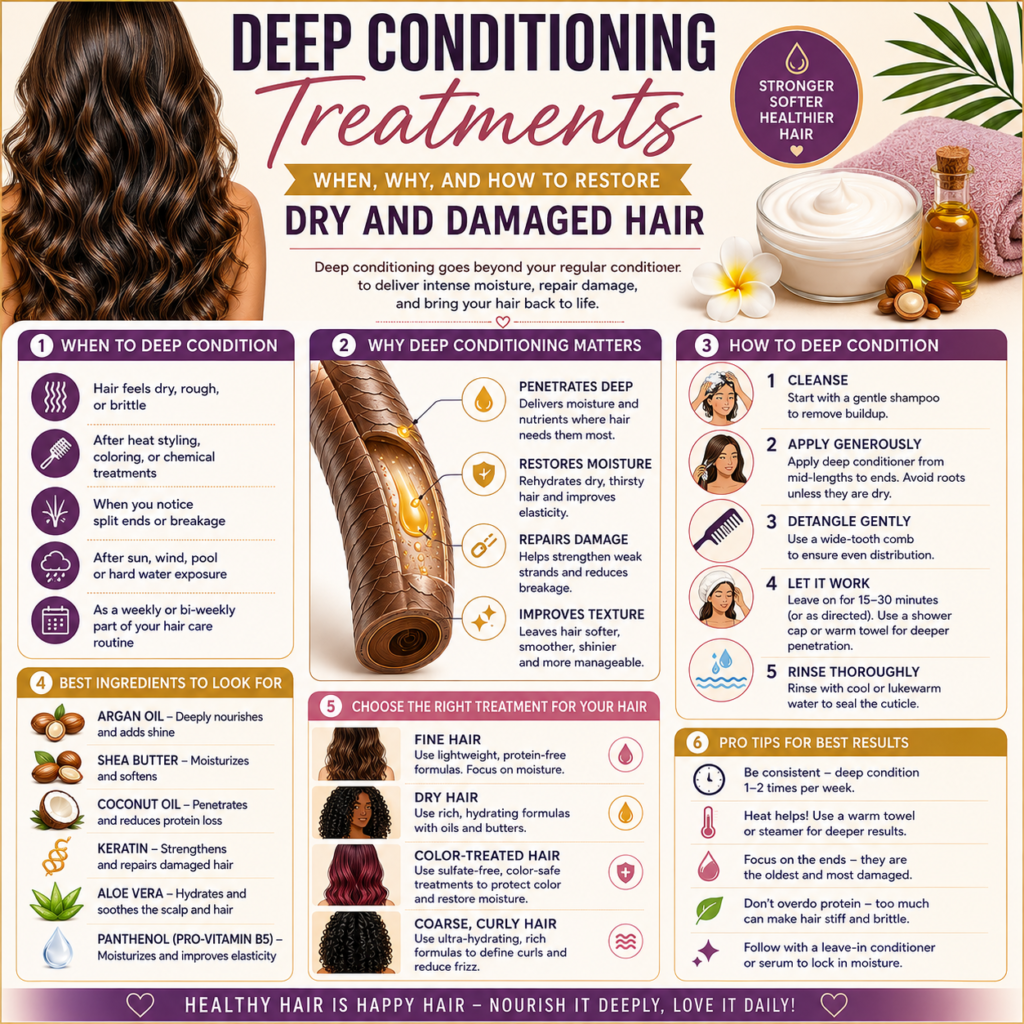
Healthy, beautiful hair is rarely achieved through shampoo alone. While regular conditioners provide essential moisture after every wash, there are times when hair requires a more intensive level of care. Exposure to colouring, bleaching, excessive heat styling, ultraviolet radiation, pollution, hard water, and even changing seasons gradually places stress on the hair fibre. Over time, these everyday factors can leave hair feeling rough, brittle, lifeless, and increasingly difficult to manage.
This is where deep conditioning treatments become an invaluable part of a complete hair care routine. Unlike daily conditioners, deep conditioners are specifically formulated to remain on the hair for longer, allowing conditioning ingredients additional time to coat the hair fibre, improve softness, reduce friction, and restore manageability.
Although deep conditioning cannot permanently repair damaged hair, it can significantly improve its appearance, texture, and resilience, helping hair remain healthier-looking between trims and future growth cycles.
Understanding Why Hair Becomes Dry
Hair naturally contains moisture that contributes to its flexibility and shine. The outer cuticle acts as a protective shield, helping retain this moisture while defending the inner structure against external stress.
As the cuticle becomes worn through everyday exposure, moisture escapes more easily. Hair gradually loses elasticity, becoming increasingly prone to tangles, split ends, and breakage.
Several factors accelerate this process.
Chemical Treatments
Hair colouring, bleaching, relaxing, and permanent waving all involve chemical changes within the hair structure. Although modern techniques are considerably gentler than in the past, repeated chemical treatments gradually weaken the protective cuticle and increase moisture loss.
Heat Styling
Hair dryers, curling irons, straighteners, and heated brushes expose the hair to elevated temperatures. Frequent use without appropriate protection may leave hair feeling progressively drier and rougher.
Environmental Exposure
Sunlight, wind, salt water, chlorinated swimming pools, and air pollution continuously affect the outer surface of the hair. While these influences are often overlooked, they contribute significantly to cumulative dryness over time.
What Makes Deep Conditioners Different?
At first glance, a deep conditioner may appear similar to an ordinary conditioner. However, their formulations are designed with different objectives.
Daily conditioners primarily improve manageability after shampooing, allowing hair to detangle more easily while restoring a moderate level of softness.
Deep conditioners contain richer combinations of conditioning agents, moisturising ingredients, emollients, and sometimes proteins. Their thicker consistency allows these ingredients to remain in contact with the hair for a longer period before rinsing, producing a more intensive conditioning effect.
Rather than serving as an everyday necessity, deep conditioners are intended to complement regular conditioning as part of a broader maintenance routine.
The Benefits of Deep Conditioning
When incorporated consistently into an appropriate hair care routine, deep conditioning treatments offer several valuable benefits.
Improved Moisture Retention
One of the primary goals of deep conditioning is helping hair retain moisture more effectively. Better hydration contributes to improved flexibility, making hair less likely to snap during brushing or styling.
Enhanced Softness
Hair that has become rough through repeated washing or environmental exposure often regains a noticeably softer texture following deep conditioning treatments.
The smoother cuticle also reflects light more evenly, creating the appearance of healthier, shinier hair.
Reduced Friction
Individual hairs constantly rub against one another throughout the day. Deep conditioners reduce this friction, making combing and brushing significantly easier while helping minimise mechanical breakage.
Better Styling Performance
Hair that feels moisturised generally responds more predictably during styling. Blow drying becomes smoother, curls appear more defined, and straight styles often require fewer passes with heated tools.
Who Benefits Most from Deep Conditioning?
Although almost everyone can benefit from occasional deep conditioning, certain hair types typically require it more frequently.
Curly and Coily Hair
Natural curls tend to lose moisture more quickly because scalp oils travel less efficiently along the twists and bends of each strand.
Deep conditioning helps maintain softness while improving curl definition and reducing excessive frizz.
Colour-Treated Hair
Hair that undergoes regular colouring often requires additional hydration to compensate for moisture lost during chemical processing.
Regular deep conditioning supports smoother, more manageable colour-treated hair.
Bleached Hair
Bleaching is among the most demanding cosmetic treatments performed on hair. Rich conditioning treatments help improve softness and reduce the rough texture that frequently develops after repeated lightening procedures.
Long Hair
Longer hair has simply experienced more years of environmental exposure than newly grown hair near the scalp. Consequently, the ends usually benefit from additional conditioning attention.
How Often Should You Deep Condition?
There is no universal schedule suitable for everyone.
Hair that remains healthy and untreated may require deep conditioning only occasionally, while dry, curly, chemically processed, or mature hair often benefits from weekly treatments.
The key is observing how your own hair responds rather than following rigid rules.
If hair begins feeling heavy or coated, treatments may be too frequent. If it consistently feels rough shortly after washing, additional conditioning may be beneficial.
Applying a Deep Conditioner Correctly
Proper application plays an important role in achieving consistent results.
After shampooing, gently squeeze excess water from the hair before applying the treatment. Hair that is dripping wet may dilute the conditioner, reducing its effectiveness.
Work the product gradually through the mid-lengths and ends, ensuring even distribution without unnecessary rubbing.
Using a wide-tooth comb can help spread the conditioner uniformly while gently removing tangles.
Allow the treatment to remain on the hair according to the manufacturer’s directions before rinsing thoroughly.
Patience during this stage often produces noticeably better results than rinsing immediately.
Should You Apply Heat?
Some deep conditioning routines recommend gentle warmth during treatment.
Moderate warmth may slightly soften the hair cuticle, allowing conditioning ingredients to spread more evenly across the surface. Heated towels or specialised conditioning caps are sometimes used for this purpose.
However, excessive heat should be avoided, as very high temperatures may place additional stress on already fragile hair.
Protein vs Moisture Treatments
One area that frequently causes confusion is the difference between protein treatments and moisturising treatments.
Moisture-Focused Treatments
These products primarily improve softness, flexibility, and hydration.
Hair that feels dry, rough, or frizzy generally responds well to moisture-rich conditioning.
Protein Treatments
Protein-containing products temporarily reinforce weakened areas of the hair shaft.
Hair that has experienced extensive chemical processing or repeated heat styling may occasionally benefit from protein alongside adequate moisture.
Because every hair type responds differently, balance is often more effective than relying exclusively on either approach.
Common Deep Conditioning Mistakes
Many disappointing results occur not because the conditioner is ineffective, but because it is used incorrectly.
Applying excessive amounts rarely improves performance and may simply make rinsing more difficult.
Leaving products on far longer than recommended does not necessarily provide additional benefits.
Likewise, skipping regular conditioning between deep treatments often limits overall improvement.
Deep conditioning should complement a consistent routine rather than replace it.
Supporting Deep Conditioning with Healthy Habits
Conditioning treatments perform best when combined with gentle daily practices.
Using a soft towel instead of vigorous rubbing, avoiding unnecessarily high styling temperatures, protecting hair from prolonged sun exposure, and trimming damaged ends regularly all contribute to maintaining healthier-looking hair.
Nutrition, hydration, and overall wellbeing also influence the appearance of newly growing hair, making holistic care just as important as cosmetic treatments.
Recognising When Your Hair Needs Extra Care
Hair often provides clear signals when additional conditioning becomes necessary.
Persistent tangles, increased breakage, dullness, rough texture, excessive frizz, and reduced elasticity may all indicate that the hair is struggling to maintain adequate moisture.
Responding early with appropriate conditioning often prevents these concerns from becoming progressively more noticeable.
Final Thoughts
Deep conditioning is not reserved exclusively for severely damaged hair. It is a preventive practice that helps maintain softness, manageability, and resilience before problems become more significant. By providing intensive hydration and reducing everyday mechanical stress, deep conditioning supports healthier-looking hair regardless of age or hair type.
Rather than viewing deep conditioning as an occasional luxury, many people discover that it becomes an essential component of long-term hair maintenance. Combined with gentle cleansing, appropriate styling habits, and consistent daily conditioning, these treatments help preserve the beauty and comfort of the hair through every season and every stage of life.
The End
AMBERSEABEAUTY.COM
 Discover More From Our Family of Websites
 ZodiacBearing (Astrology, Tarot, Numerology, Angel Numbers & Spiritual Guidance)
 Velourana (Beauty, Makeup, Hair Care, Skincare & Beauty Tips)
 HavenBearing (Home, Living, Organization, Décor & Everyday Inspiration)
 PawBearing (Pet Care, Dog Breeds, Animal Health, Training & Pet Products)
 PsyCatherine (Notes From the Journal of a Psychologist on Real Life)