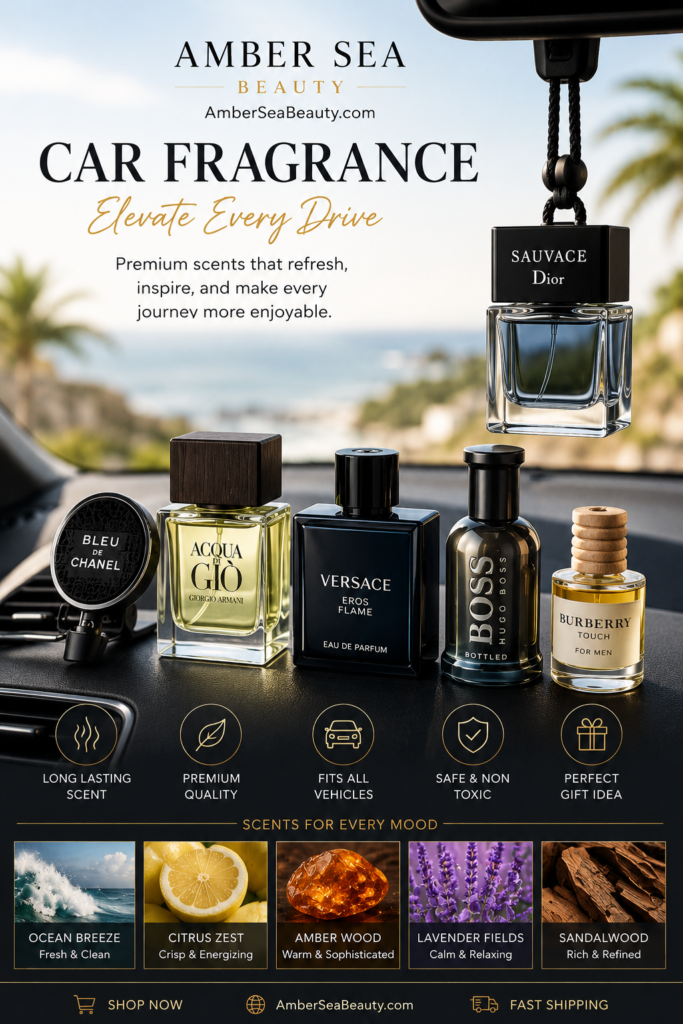
CATEGORY: Car Fragrance
Choosing a car fragrance is more complicated than simply picking a scent that smells pleasant in the package.
The same fragrance can feel elegant in one vehicle and overwhelming in another.
A soft citrus spray may suit a compact city car perfectly.
A deep amber diffuser may feel better in a larger vehicle with leather upholstery.
A hanging freshener that works well for occasional driving may become too strong during long daily commutes.
The right car fragrance depends on several factors working together:
The scent family.
The strength.
The product format.
The size of the vehicle.
How often the car is used.
The climate.
The amount of ventilation.
And how sensitive the driver and passengers are to fragrance.
This means the best choice is not necessarily the strongest, most expensive, or longest-lasting product.
It is the one that creates a pleasant cabin atmosphere without becoming distracting or tiring.
Start With the Type of Scent You Actually Enjoy
The first decision is fragrance family.
Car fragrances are commonly available in:
Citrus.
Fresh linen.
Marine.
Aquatic.
Floral.
Woody.
Leather-inspired.
Vanilla.
Amber.
Musk.
Fruity.
Gourmand.
Spicy.
Green or herbal profiles.
Each creates a different mood.
Citrus tends to feel bright and energetic.
Marine scents feel cooler.
Woody scents feel deeper.
Vanilla feels warm.
Leather-style fragrances can feel more automotive and sophisticated.
Fresh linen tends to create a clean, neutral impression.
Choosing the family first makes the rest of the decision easier.
Citrus Works Well for Drivers Who Want Freshness
Citrus fragrances are often associated with a clean, lively cabin.
Common notes include:
Lemon.
Orange.
Bergamot.
Grapefruit.
Lime.
Mandarin.
These scents often feel lighter than vanilla, amber, or gourmand fragrances.
They can work especially well for drivers who prefer something noticeable but not heavy.
Citrus is also a useful choice when the car is used frequently because the fragrance is less likely to feel dense during long periods inside the cabin.
Marine and Aquatic Scents Feel Cooler
Marine and aquatic fragrances usually aim to create a fresh-air impression.
They may suggest:
Sea breeze.
Water.
Ozone.
Cool air.
Clean fabric.
These profiles are often suitable for people who dislike sweet fragrances.
They can work particularly well in warmer climates or during summer because they feel visually and psychologically cooler.
The scent itself does not lower cabin temperature, of course, but the fragrance character can feel lighter and fresher.
Fresh Linen Is One of the Safest General Choices
Fresh-linen and clean-cotton styles are often easy to live with.
They are less distinctive than heavy woody or gourmand scents, but that can be an advantage.
A shared vehicle may be used by several people.
A very strong vanilla or leather fragrance may appeal to one person and bother another.
Fresh-linen profiles tend to feel more neutral.
They can also work well after interior cleaning because they reinforce the impression of cleanliness.
Woody Fragrances Create a Deeper Atmosphere
Woody car fragrances often use notes such as:
Cedar.
Sandalwood.
Pine.
Vetiver.
Smoky wood.
Dry timber accords.
These tend to feel more grounded and less playful.
They can suit darker vehicle interiors, leather upholstery, or drivers who prefer fragrance styles similar to personal perfumes or home diffusers.
Woody scents are often more noticeable over time because they tend to have greater depth than simple fresh fragrances.
Leather-Inspired Scents Suit the Automotive Environment Naturally
Leather-style fragrances are popular because they relate directly to the car interior.
They may smell:
Dry.
Warm.
Smoky.
Polished.
Rich.
Some are designed to resemble new leather.
Others combine leather with amber, woods, musk, or spice.
They can suit vehicles with leather seats or darker trims especially well.
However, leather-inspired fragrance can become heavy if the product is very strong.
A lower-intensity format may be preferable in smaller cars.
Vanilla Is Warm but Can Become Intense
Vanilla is one of the most recognizable fragrance profiles.
It can feel:
Soft.
Sweet.
Comforting.
Warm.
But in a closed car cabin, sweet vanilla can become intense quickly.
A large SUV may absorb it more comfortably than a very small hatchback.
Drivers who like vanilla but dislike excessive sweetness may prefer blends that combine it with woods, musk, amber, or spice.
Amber and Musk Suit Richer Fragrance Preferences
Amber and musk-style scents tend to feel more perfumed.
They may resemble personal fragrance more than traditional air fresheners.
These profiles often work well for drivers who want the car interior to feel distinctive or luxurious.
They can be especially effective in:
Evening driving.
Dark interiors.
Leather cabins.
Larger vehicles.
Because these scents can be strong, dosage control becomes important.
Fruity Scents Feel More Playful
Fruit-based car fragrances include profiles such as:
Apple.
Cherry.
Berry.
Peach.
Mango.
Melon.
Tropical fruit.
They tend to feel brighter and more casual.
Some are fresh and tart.
Others are very sweet.
The exact formula matters.
A crisp apple fragrance can feel very different from a candy-style cherry fragrance.
If you dislike artificial sweetness, choose fruit scents with citrus, green, or woody notes rather than heavily sugary blends.
Gourmand Scents Are the Heaviest for Many People
Gourmand fragrances are inspired by food-like notes.
Vanilla.
Caramel.
Chocolate.
Coffee.
Coconut.
Dessert accords.
These can be enjoyable, especially in cooler weather.
But they are also among the easiest to overdo in a small enclosed cabin.
If you love gourmand fragrance, begin with a low-intensity format and increase gradually.
Consider How Strong You Want the Car to Smell
Fragrance strength is one of the most important decisions.
Some people want the scent to be obvious as soon as the door opens.
Others prefer only a faint background fragrance.
Neither preference is wrong.
The issue is matching the product format to the desired strength.
A spray gives the greatest control.
A vent clip can be strong while the airflow is running.
A gel provides gradual passive fragrance.
A hanging card often provides a steady but simpler effect.
An oil diffuser can range from subtle to strong depending on design and temperature.
A Small Car Needs Less Fragrance
Vehicle size strongly affects perceived intensity.
A small city car has limited cabin volume.
The same fragrance product may feel much stronger than it would inside:
A large SUV.
A van.
A large saloon.
A seven-seat vehicle.
This is simple concentration.
A small amount of fragrance occupies a small air volume.
If you drive a compact car, start with:
Lower intensity.
Fewer sprays.
Partially opened gel containers.
A smaller diffuser.
A milder vent setting.
It is easier to increase fragrance than remove it.
Larger Vehicles Can Handle More Diffusion
Larger vehicles may need stronger or more distributed fragrance.
A very small hanging freshener may feel weak in a large cabin.
A vent clip with stronger airflow distribution may work better.
A larger gel or diffuser may also provide more consistent coverage.
Some drivers prefer one fragrance source in the front and another mild source in the rear, but this should be done carefully to avoid over-fragrancing.
The goal is even distribution, not maximum intensity.
Daily Driving Changes the Best Choice
A driver who spends two hours per day in the car experiences fragrance very differently from someone who drives twice per week.
Frequent drivers may prefer:
Milder scents.
Adjustable vent products.
Low-dose sprays.
Fresh profiles.
Fragrances that do not become tiring.
A strong sweet fragrance that feels pleasant for ten minutes may become exhausting during long commutes.
Long exposure changes preference.
Occasional Drivers Can Use More Immediate Formats
If the car is used only occasionally, a spray can be especially practical.
The vehicle does not need to remain fragranced continuously.
A few sprays before driving can refresh the cabin.
This may be more efficient than leaving a passive product inside for weeks while the car is rarely used.
Shared Cars Need More Neutral Choices
If several people drive or ride in the vehicle, highly distinctive fragrance may not suit everyone.
Fresh linen.
Mild citrus.
Soft marine scents.
Low-level woody fragrances.
These are often easier to share than:
Very sweet vanilla.
Heavy amber.
Strong leather.
Intense floral fragrance.
A shared vehicle benefits from moderation.
Children May Prefer Milder Cabin Fragrance
Family vehicles often spend long periods with children inside.
A very strong fragrance can become unpleasant quickly in a closed cabin.
Lower intensity is usually more practical.
Products should also be placed securely and out of reach.
Avoid containers that can be opened, spilled, or handled easily by children.
Pet Owners Should Be Conservative With Strength
Dogs and other pets experience the vehicle differently from people.
They may sit lower in the cabin.
Remain closer to surfaces.
Spend long journeys inside the vehicle.
Strong fragrance may be unnecessary.
A lighter approach is usually more comfortable in pet-carrying vehicles.
Products should also remain out of reach of animals.
Format Matters as Much as Fragrance
Two products with the same scent can feel very different if the delivery system changes.
For example:
A citrus spray may feel light because you control the amount.
A citrus vent clip may feel stronger every time the air-conditioning is used.
A citrus hanging freshener may provide continuous low-level scent.
A citrus oil diffuser may create a richer and more decorative effect.
This is why buying by fragrance name alone can be misleading.
Choose Spray for Maximum Control
Sprays are best when you want:
Immediate use.
Adjustable strength.
Occasional application.
Easy fragrance changes.
No permanent accessory.
They are especially good for users who are sensitive to continuous scent.
The main limitation is duration.
You may need to refresh more often than with passive products.
Choose a Vent Clip for Convenient Daily Fragrance
Vent clips suit frequent drivers.
They are:
Compact.
Easy to install.
Continuous.
Supported by airflow.
Often adjustable.
The fragrance may become stronger while heating or air-conditioning is running.
If you use the climate system constantly, choose a scent that remains pleasant even at higher intensity.
Choose a Hanging Freshener for Simplicity
Hanging fresheners are straightforward.
No power.
No spraying.
No complicated setup.
They work well for people who want a low-maintenance product.
They are also easy to replace.
The main consideration is visibility and placement.
The product should not obstruct the driver’s view or become distracting.
Choose Gel for Gradual Passive Fragrance
Gel products suit drivers who want:
Steady diffusion.
No hanging accessory.
No liquid bottle.
No spray application.
Some allow intensity adjustment by opening or closing vents.
This makes them useful for drivers who want a consistent background scent.
Choose an Oil Diffuser for a More Decorative Product
Oil-based diffusers often look more premium.
They may include:
Glass bottles.
Wooden caps.
Decorative cords.
Minimalist designs.
They can complement a more carefully styled interior.
But liquid products require more attention.
They must remain secure.
They should not leak.
They should not spill onto sensitive surfaces.
Choose Powered Devices for More Control Features
Some powered fragrance systems allow:
Multiple intensity levels.
Timed release.
Cartridge replacement.
Automatic operation.
These can suit buyers who enjoy more technical accessories.
But they also require more maintenance.
Charging.
Replacement cartridges.
Device cleaning.
A passive fragrance may be better if simplicity is more important.
Temperature Affects Fragrance Choice
Car interiors can become extremely warm.
Heat can increase fragrance evaporation.
A scent that feels subtle in spring may feel much stronger in summer.
This matters especially for:
Oil diffusers.
Gels.
Vent products.
Hanging fresheners.
Warm climates generally favor lighter fragrance use.
Hot Weather Often Suits Fresher Profiles
During summer, many drivers prefer:
Citrus.
Marine.
Green.
Fresh linen.
Light floral.
These profiles tend to feel less dense in heat.
Heavy vanilla, caramel, amber, or gourmand fragrances may feel more intense in a hot cabin.
That does not mean they cannot be used.
It simply means lower intensity may be more comfortable.
Cooler Weather Can Support Richer Fragrance
In colder months, deeper scents can feel more appropriate.
Amber.
Leather.
Woods.
Vanilla.
Spice.
Musk.
These may feel warmer and more substantial.
Lower temperatures can also reduce evaporation, which may make some products seem less intense than they do in summer.
Air-Conditioning Use Changes Vent Clip Performance
A vent fragrance depends partly on airflow.
If you rarely use the climate system, the scent may seem weak.
If you use strong airflow constantly, it may become much more noticeable.
This is why vent products are particularly suited to drivers who use heating or air-conditioning regularly.
Fragrance Sensitivity Should Be Considered
Some people simply dislike strong scent.
Others may find certain fragrance profiles unpleasant even at moderate strength.
If you are sensitive to perfume, choose:
Sprays used sparingly.
Low-intensity vent products.
Mild fresh-linen scents.
Light citrus.
Soft woody profiles.
Avoid buying very strong long-lasting products first.
Start conservatively.
Passenger Sensitivity Matters Too
You may love a strong fragrance.
Passengers may not.
If the car regularly carries:
Family.
Clients.
Colleagues.
Friends.
Choose a more neutral profile and moderate strength.
A cabin fragrance should improve comfort rather than dominate conversation.
Fragrance Strength Should Be Judged After Several Minutes
The first impression can be misleading.
When you enter the car, fragrance may seem strong.
After several minutes, your perception may change.
Likewise, a fragrance that seems weak at first may build as the cabin warms or the ventilation begins.
Give the product time before increasing intensity.
Nose Fatigue Can Make You Think the Fragrance Has Disappeared
People become accustomed to scents they experience repeatedly.
This is sometimes called olfactory adaptation.
You may stop noticing the car fragrance while other people still detect it.
This can lead to overuse.
Before adding more spray or replacing a product early, ask someone else whether the scent is still noticeable.
Avoid Mixing Unrelated Fragrance Families
Combining several products can create a confused result.
For example:
Vanilla vent clip.
Marine hanging freshener.
Cherry spray.
Leather diffuser.
Each may be pleasant alone.
Together they may compete.
If you use more than one product, keep them in related fragrance families.
For example:
Citrus + fresh linen.
Leather + woods.
Vanilla + amber.
Marine + clean musk.
Match Fragrance to Interior Style If You Care About Atmosphere
This is optional, but it can create a more cohesive experience.
A minimalist light interior may suit:
Fresh linen.
Citrus.
Soft wood.
Marine.
A dark leather interior may suit:
Leather.
Amber.
Musk.
Cedar.
A sporty interior may suit:
Fresh citrus.
Green.
Aquatic.
A luxury-oriented cabin may suit:
Woody amber.
Leather.
Musk.
Subtle floral.
This is not a rule.
Fragrance is personal.
But atmosphere can guide the choice.
Consider Whether the Product Is Visible
Some car fragrance products become part of the interior design.
A hanging bottle.
Decorative vent clip.
Colored gel container.
Graphic air freshener.
If appearance matters, choose a product that suits the car interior.
If you prefer a clean dashboard, choose something discreet.
The best fragrance product should not visually annoy you every time you drive.
Discreet Products Suit Minimalist Interiors
A small vent clip.
Hidden gel.
Compact cartridge system.
Low-profile diffuser.
These keep the cabin visually uncluttered.
They are ideal for drivers who dislike hanging accessories or colorful graphics.
Decorative Products Can Add Personality
Some drivers enjoy visible fragrance accessories.
A small bottle diffuser.
A patterned hanging freshener.
A custom-shaped card.
These can become part of the vehicle’s character.
The only requirement is that decoration does not interfere with safety.
Placement Should Never Compromise Visibility
A fragrance product should not block:
Mirrors.
Windscreen view.
Controls.
Vent operation.
Instrument display.
Anything that distracts or obstructs the driver is poorly placed regardless of how attractive it looks.
Loose Containers Should Be Avoided
A fragrance container rolling around the cabin is inconvenient and potentially unsafe.
Cup holders.
Secure compartments.
Manufacturer-designed mounting points.
These are better choices.
The product should remain stable during:
Braking.
Cornering.
Acceleration.
Liquids Need Extra Caution
Oil fragrance products can spill.
A leak may damage:
Plastic trim.
Painted surfaces.
Leather.
Fabric.
Other materials.
Follow the product instructions.
Do not overfill.
Do not leave a damaged bottle in the car.
Fragrance Does Not Solve Underlying Odor Problems
Before choosing a stronger scent, ask whether the car actually needs cleaning.
Persistent odor can come from:
Food.
Smoke.
Pets.
Damp carpets.
Spills.
Dirty upholstery.
Air-conditioning systems.
Fragrance should enhance a clean interior.
It should not become a substitute for cleaning.
Clean First, Fragrance Second
The best fragrance experience usually begins with:
Removing trash.
Vacuuming.
Cleaning upholstery.
Drying damp areas.
Cleaning mats.
Ventilating the car.
Then adding fragrance.
The result smells cleaner because the fragrance is not competing with unwanted odors.
Heavy Fragrance Can Make Odor Problems Worse
A strong vanilla product over a damp carpet does not remove the damp smell.
It creates:
Vanilla + damp.
A powerful cherry spray over cigarette odor creates:
Cherry + smoke.
This often smells worse than either alone.
Address the source first.
Choose Strength Based on How Long You Drive
Long commutes usually call for lower intensity.
A fragrance that is pleasant for five minutes can become tiring after ninety.
If you spend significant time in the car, subtle scent tends to be more comfortable.
Occasional short journeys can support stronger fragrance if you prefer it.
Long Road Trips Need Moderation
During several hours inside the vehicle, fragrance can become more noticeable over time.
A mild scent is usually easier to tolerate.
Ventilation can also help.
The goal should be comfortable atmosphere rather than maximum fragrance output.
City Driving and Frequent Stops Can Change Perception
Opening doors frequently allows scent to escape.
Air enters and leaves repeatedly.
This can make passive fragrances feel weaker.
A vent clip or spray may suit this pattern better than an extremely subtle passive diffuser.
Garage-Parked Cars Behave Differently From Cars in Direct Sun
A vehicle parked in shade or indoors often remains cooler.
Fragrance may evaporate more slowly.
A car parked in direct sun may become much hotter, increasing scent strength and product consumption.
Parking conditions therefore affect both performance and longevity.
Replacement Cost Matters Over Time
Some products are inexpensive individually but need frequent replacement.
Others cost more initially but use cartridges or refills.
Consider:
Initial price.
Refill price.
Expected lifespan.
How often you drive.
How strong you use it.
The cheapest product is not always the cheapest over several months.
Refillable Systems Can Be Convenient
A reusable holder with replaceable fragrance may reduce waste and simplify replacement.
This can be useful if you find one device you genuinely like.
The disadvantage is dependence on compatible refills.
Before buying, consider whether replacement cartridges are easy to obtain.
Disposable Products Are Simpler
A hanging card or basic gel requires no system.
Use it.
Replace it.
No compatibility issues.
No charging.
No device maintenance.
For many users, simplicity matters more than advanced features.
Seasonal Rotation Can Keep the Car Fragrance Interesting
Some people enjoy changing fragrance according to season.
Spring:
Green.
Floral.
Light citrus.
Summer:
Marine.
Citrus.
Fresh linen.
Autumn:
Woody.
Spicy.
Amber.
Winter:
Vanilla.
Leather.
Musk.
This is optional, but it can prevent fragrance fatigue.
One Signature Scent Is Another Good Strategy
Other drivers prefer using the same fragrance year-round.
This creates a recognizable personal cabin scent.
A signature scent works best when it is:
Comfortable.
Moderate.
Versatile.
Not overly seasonal.
Woody citrus, clean musk, leather-amber, or fresh linen blends can work well for this purpose.
Test Before Buying Large Quantities
If possible, avoid buying many refills before knowing that you like the fragrance inside the car.
A scent smelled from packaging or in a shop may behave differently in a heated enclosed cabin.
Buy one first.
Use it.
Observe it for several days.
Then decide whether it deserves repeat purchase.
A Fragrance Can Smell Different in the Car Than in the Store
Temperature, upholstery, ventilation, and existing cabin odors all influence perception.
A sweet fragrance can become sweeter.
A woody fragrance can feel heavier.
A citrus fragrance may evaporate quickly.
Real-world use is the best test.
Keep Expectations Realistic About Longevity
Manufacturers may estimate product duration, but actual lifespan depends on:
Temperature.
Airflow.
Product exposure.
Vehicle size.
Frequency of use.
Storage conditions.
A vent clip used daily with strong airflow may behave differently from the same product in a rarely driven car.
Stronger Does Not Mean Better Quality
Fragrance strength and fragrance quality are not the same thing.
A refined low-level scent can feel more pleasant than an overpowering one.
The product should create atmosphere, not challenge the senses.
Long-Lasting Does Not Automatically Mean Better Either
A very long-lasting product may be convenient.
But if you become tired of the scent, that longevity becomes a disadvantage.
Some users may prefer shorter-lasting products because they can change fragrance more frequently.
Personal routine matters.
Choose the Format According to Your Priorities
If your priority is:
Control → choose spray.
Convenience → choose vent clip.
Simplicity → choose hanging freshener.
Steady passive fragrance → choose gel or solid.
Appearance → choose decorative oil diffuser.
Technology → choose powered fragrance device.
The format should solve your practical need first.
Then Choose the Scent
Once the format is right, choose fragrance family.
Fresh.
Warm.
Woody.
Sweet.
Clean.
Floral.
Fruity.
The decision becomes much easier because you are no longer comparing completely different product types at once.
Then Adjust the Strength
Start low.
Increase slowly.
In a small cabin, subtle usually works better than excessive fragrance.
If the product has an intensity control, begin at the lowest setting.
Give it time.
Adjust only after experiencing the scent during a normal drive.
The Best Car Fragrance Should Become Part of the Background
A good fragrance is noticeable.
But it should not demand attention continuously.
You should be able to:
Drive.
Talk.
Listen to music.
Travel.
Without constantly thinking about the scent.
That is usually the sign that the intensity is right.
Choosing a Car Fragrance Is Really About Matching Four Things
The simplest way to think about the category is to match:
Scent.
What fragrance family do you genuinely enjoy?
Strength.
How noticeable do you want it to be?
Format.
How do you want the fragrance delivered?
Vehicle.
How large is the cabin and how is the car used?
Once these four elements align, buying becomes much more straightforward.
A Small Car and a Large SUV May Need Completely Different Products
A compact car may work beautifully with:
One mild vent clip.
A few occasional sprays.
A small hanging freshener.
A larger SUV may need:
Stronger airflow-assisted fragrance.
A larger passive diffuser.
A more substantial cartridge system.
The same fragrance can still work.
The delivery needs to change.
A Frequent Commuter and an Occasional Driver Need Different Solutions Too
Frequent commuter:
Lower intensity.
Long-lasting.
Comfortable scent.
Easy adjustment.
Occasional driver:
Spray.
Simple hanging freshener.
Flexible use.
No need for permanent diffusion.
Lifestyle influences the best product as much as fragrance preference.
Car Fragrance Should Fit the Driver, Not the Trend
A fragrance can be popular and still be wrong for you.
You may prefer:
Light citrus over luxury amber.
Basic fresh linen over expensive leather.
A simple hanging card over a powered diffuser.
There is no universal hierarchy.
The best product is the one you enjoy using.
Make the Cabin Pleasant, Not Overperfumed
This is the final goal.
Car fragrance should improve the experience of getting into the vehicle.
It should make the cabin feel:
Cleaner.
Fresher.
Warmer.
More personal.
More refined.
Depending on the scent you choose.
It should not become so strong that the windows need to be opened immediately.
Moderation usually creates a more sophisticated result.
The Right Choice Comes From Matching Fragrance to Real Use
Begin with the scent family.
Consider the vehicle size.
Think about how long you drive.
Choose the format.
Start with low intensity.
Observe how heat and airflow affect it.
Adjust gradually.
Keep the car clean.
Replace the product when the scent genuinely fades, not simply because you have become used to it.
Once you approach car fragrance this way, the category becomes much easier to navigate.
You are not simply choosing between dozens of smells.
You are choosing a fragrance system that suits the way you actually use your car.
That is what makes the difference between a product that is pleasant for a few minutes and one that genuinely improves the cabin experience over time.
The End
AmberSeaBeauty.com
 Discover More From Our Family of Websites
 ZodiacBearing (Astrology, Tarot, Numerology, Angel Numbers & Spiritual Guidance)
 Velourana (Beauty, Makeup, Hair Care, Skincare & Beauty Tips)
 HavenBearing (Home, Living, Organization, Décor & Everyday Inspiration)
 PawBearing (Pet Care, Dog Breeds, Animal Health, Training & Pet Products)
 PsyCatherine (Notes From the Journal of a Psychologist on Real Life)