CATEGORY: Conditioners
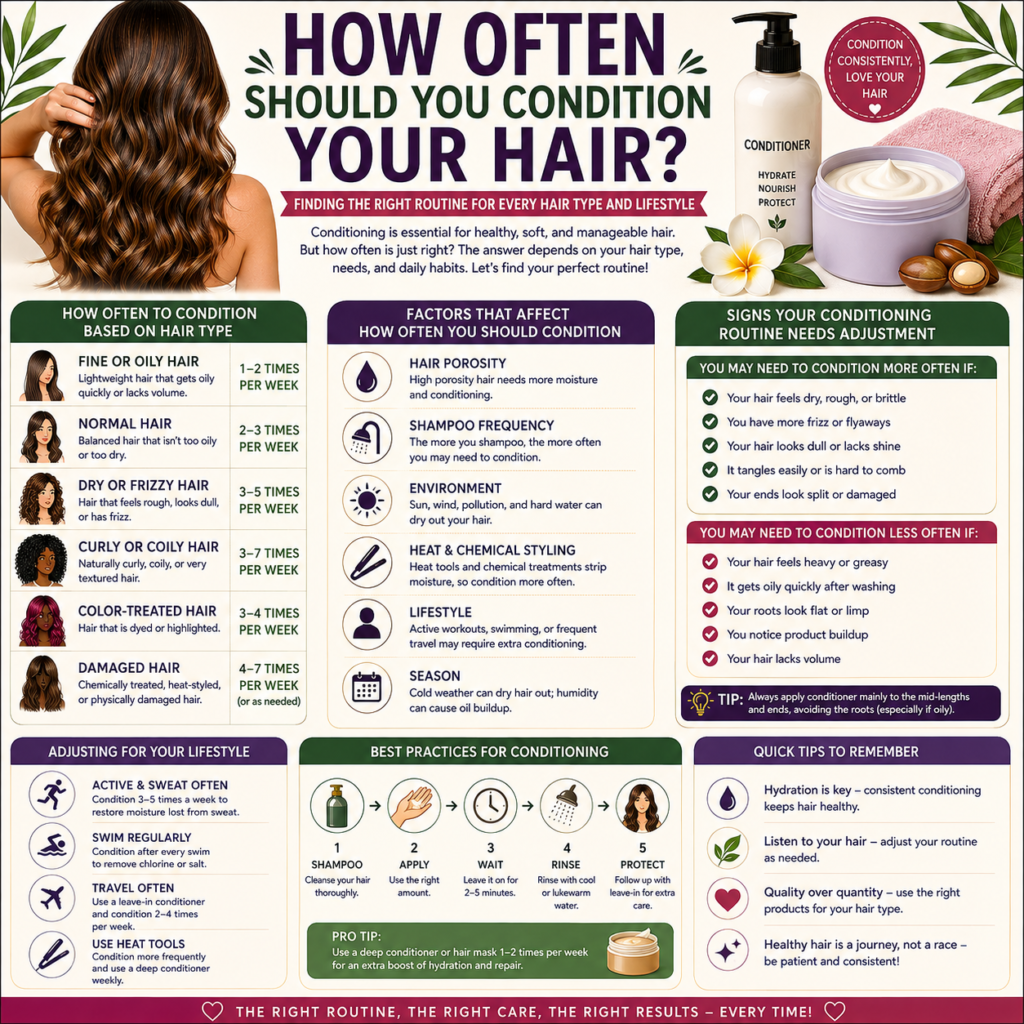
One of the most frequently asked questions in hair care is surprisingly simple: how often should you use conditioner? Unlike shampoo, which is often discussed in terms of washing frequency, conditioner tends to receive far less attention. Many people apply it automatically after every wash without considering whether their hair actually requires more or less conditioning. Others skip it altogether because they believe it makes their hair greasy or reduces volume.
The reality is that there is no universal schedule that suits everyone. The ideal conditioning routine depends upon many factors, including hair type, scalp condition, hair length, styling habits, environmental exposure, age, and chemical treatments. What works beautifully for one person may produce disappointing results for another.
Rather than following fixed rules, developing an understanding of your own hair allows you to build a routine that keeps it healthy, comfortable, and manageable throughout every season of the year.
Why Conditioning Frequency Matters
Hair is exposed to countless forms of daily stress.
Every shampoo removes not only dirt and styling products but also some of the natural oils that help lubricate the hair fibre. Sunlight gradually weakens the outer cuticle. Wind creates tangles. Brushing causes friction. Heated styling tools remove moisture, while colouring and bleaching alter the structure of the hair itself.
Conditioner helps counterbalance many of these everyday challenges by smoothing the cuticle, reducing friction, improving softness, and making hair easier to manage.
Using conditioner too infrequently may leave hair dry and difficult to style. Applying products more often than necessary, however, may leave certain hair types feeling unnecessarily heavy. Finding the right balance is therefore far more important than following trends or rigid schedules.
The Relationship Between Shampoo and Conditioner
Conditioner and shampoo should be viewed as complementary products rather than separate treatments.
Shampoo cleanses the scalp and hair by removing oils, dirt, perspiration, pollution, and cosmetic residue.
Conditioner follows this cleansing process by restoring softness, improving lubrication, and helping the hair recover from the mechanical stress created during washing.
Because shampoo temporarily lifts the cuticle, conditioner plays an important role in smoothing the hair afterwards.
For most people, conditioner is not an optional luxury but an essential companion to shampoo.
Conditioning Fine Hair
Fine hair presents unique challenges because it is easily weighed down.
Many people with fine hair avoid conditioner entirely after experiencing products that left their hair flat or oily. In reality, the problem usually lies in selecting an unsuitable formula rather than conditioning itself.
Lightweight conditioners designed specifically for fine hair often provide excellent hydration while preserving natural movement and volume.
Applying the conditioner mainly from the mid-lengths to the ends also helps avoid unnecessary heaviness near the scalp.
Most people with fine hair can comfortably condition after every shampoo when an appropriate product is chosen.
Conditioning Thick Hair
Thicker hair generally contains more individual fibres and often requires greater moisture to remain soft and manageable.
Because natural scalp oils have more hair to travel through, the ends may gradually become drier than the roots.
Regular conditioning after washing usually helps maintain smoothness while reducing tangles and improving brushing.
People with particularly coarse hair may also benefit from occasional richer conditioning treatments between routine washes.
Conditioning Curly and Coily Hair
Curly and coily hair naturally behaves differently from straight hair.
The twists and curves along each strand slow the movement of natural scalp oils, leaving the ends more susceptible to dryness.
As a result, many individuals with textured hair benefit from more consistent conditioning routines.
In addition to regular rinse-out conditioner, some people also incorporate leave-in conditioners or periodic deep conditioning treatments to maintain softness and improve curl definition.
Observation remains more valuable than fixed schedules because curl patterns vary considerably from person to person.
Colour-Treated Hair
Chemical colouring temporarily changes the structure of the hair.
Although modern colouring systems have become increasingly sophisticated, colour-treated hair generally appreciates additional conditioning support to maintain softness and manageability.
Conditioning after every shampoo is commonly recommended for coloured hair, while periodic intensive conditioning may provide additional comfort following repeated colouring sessions.
The objective is not only to improve appearance but also to minimise friction that may contribute to unnecessary breakage.
Mature Hair
Hair often changes with age.
Many people notice reduced oil production, increased dryness, and greater sensitivity to environmental conditions over time.
Conditioning becomes increasingly valuable because it helps maintain flexibility while reducing roughness and improving ease of styling.
Selecting moisturising formulations appropriate for mature hair frequently provides noticeable improvements in comfort and appearance without dramatically altering natural texture.
How Lifestyle Influences Conditioning Frequency
Hair care routines should also reflect daily activities.
Frequent Exercise
Individuals who exercise regularly may shampoo more often because of perspiration.
Consequently, they usually benefit from conditioning after each wash to help restore softness.
Swimming
Both chlorinated pools and salt water can leave hair feeling noticeably drier.
Conditioning after swimming helps replenish moisture while improving manageability.
Daily Heat Styling
Hair exposed to regular blow drying, straightening, or curling generally benefits from consistent conditioning because heat gradually increases moisture loss.
Supporting these routines with leave-in conditioners or heat protectants often provides additional protection.
Recognising the Signs That Your Hair Needs More Conditioner
Hair usually provides clear indications when conditioning is insufficient.
Common signs include:
- Increased tangling.
- Rough texture.
- Reduced shine.
- Difficulty brushing.
- Persistent frizz.
- Hair that feels dry shortly after washing.
- Ends that appear brittle or fragile.
Rather than immediately purchasing new products, first consider whether your current conditioning routine simply requires greater consistency.
Signs You May Be Over-Conditioning
Although uncommon, excessive conditioning may occasionally affect certain hair types.
Hair may begin feeling unusually heavy, appear flatter than normal, or become more difficult to style.
Fine hair is generally the most sensitive to excessive product application.
In these situations, reducing the amount of conditioner rather than eliminating it entirely often restores balance.
Adjusting Your Routine Throughout the Year
Hair rarely requires identical care in every season.
Winter frequently increases dryness because of cold temperatures and indoor heating.
Summer introduces ultraviolet radiation, swimming pools, sea water, and increased outdoor activity.
Humidity may increase frizz, while dry climates accelerate moisture loss.
Allowing your conditioning routine to evolve naturally throughout the year often produces better results than following the same schedule regardless of environmental conditions.
Building a Routine That Works for You
The most successful hair care routines are rarely the most complicated.
Gentle shampooing, appropriate conditioning after washing, occasional deep conditioning when necessary, careful brushing, sensible heat styling, and routine trimming create a balanced foundation suitable for most people.
Instead of searching for the perfect universal routine, focus on observing how your own hair behaves over time.
Healthy hair responds remarkably well to consistency.
Final Thoughts
There is no single answer to how often hair should be conditioned because every person’s hair is unique. Factors such as texture, thickness, porosity, chemical treatments, climate, and daily habits all influence the amount of conditioning required.
Rather than following rigid schedules, learning to recognise your hair’s changing needs allows you to adapt your routine with confidence. For many people, conditioning after every shampoo provides an excellent foundation, while others benefit from occasional adjustments depending on the season or their styling habits.
Ultimately, successful hair care is not measured by how many products you own but by how consistently you support the natural health and comfort of your hair through thoughtful daily habits.
The End
AMBERSEABEAUTY.COM
 Discover More From Our Family of Websites
 ZodiacBearing (Astrology, Tarot, Numerology, Angel Numbers & Spiritual Guidance)
 Velourana (Beauty, Makeup, Hair Care, Skincare & Beauty Tips)
 HavenBearing (Home, Living, Organization, Décor & Everyday Inspiration)
 PawBearing (Pet Care, Dog Breeds, Animal Health, Training & Pet Products)
 PsyCatherine (Notes From the Journal of a Psychologist on Real Life)