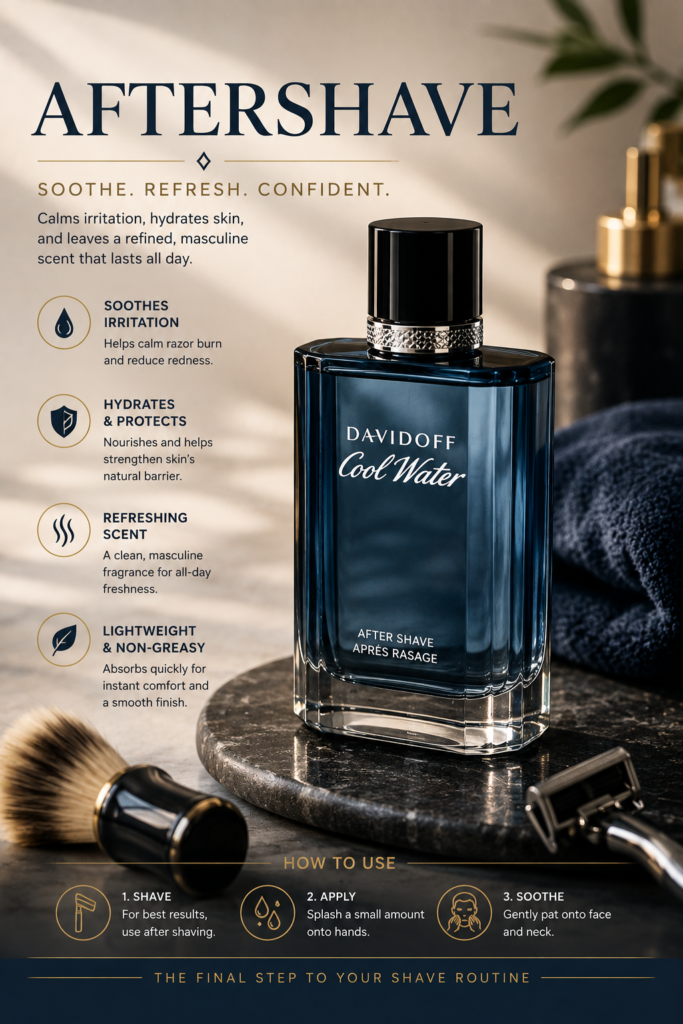
CATEGORY: Aftershave
Shaving is one of the most common grooming routines in the world, yet many people focus almost entirely on choosing the right razor or shaving cream while overlooking what happens immediately afterwards. The few minutes following a shave are some of the most important for your skin. During shaving, the razor removes not only facial hair but also a very thin layer of dead skin cells. It creates microscopic abrasions that are usually invisible but leave the skin temporarily vulnerable to irritation, dryness, bacteria, and environmental stress.
This is where aftershave becomes an essential part of a complete grooming routine.
Modern aftershave is far more than a scented finishing product. Today’s formulas are designed to soothe freshly shaved skin, reduce irritation, replenish moisture, minimise redness, and help restore the skin’s protective barrier. Whether you prefer a classic alcohol splash, a cooling gel, a lightweight lotion, or a rich balm, the right aftershave can dramatically improve both the appearance and comfort of your skin.
Unfortunately, many people either skip aftershave altogether or choose products that are unsuitable for their skin type. Others apply too much, use it incorrectly, or mistakenly believe that the familiar burning sensation means the product is working better. In reality, effective aftershave care is about supporting healthy skin rather than creating unnecessary discomfort.
Understanding how aftershave works, how to select the right product, and how to apply it correctly allows every shave to finish with skin that feels smoother, healthier, and far more comfortable throughout the day.
Why Your Skin Needs Care After Shaving
Every shave temporarily stresses the skin.
Even the sharpest razor creates tiny microscopic cuts while removing facial hair.
At the same time, some of the skin’s natural protective oils are removed, making moisture loss more likely.
Immediately after shaving, the skin may experience:
- Mild inflammation.
- Increased sensitivity.
- Temporary redness.
- Tightness.
- Dryness.
- Small nicks.
- Irritation.
Without proper aftercare, these minor effects may become more noticeable, especially in people with sensitive or dry skin.
Aftershave helps the skin recover more comfortably by calming irritation while restoring hydration and supporting the skin’s natural protective barrier.
What Exactly Is Aftershave?
The word “aftershave” describes several different types of products rather than a single formula.
Although they all serve the same general purpose, their ingredients and textures vary considerably.
Common types include:
- Traditional aftershave splashes.
- Aftershave balms.
- Aftershave lotions.
- Cooling gels.
- Moisturising creams.
Each offers different benefits depending on individual skin needs.
The best choice is not necessarily the strongest fragrance or the most expensive bottle, but the one that suits your skin type and shaving routine.
Traditional Aftershave Splash
Classic aftershave splashes have been popular for generations.
They usually contain alcohol together with fragrance and soothing botanical ingredients.
Alcohol provides temporary antibacterial properties while creating the familiar cooling sensation many people associate with traditional barber shops.
However, alcohol can also dry the skin.
People with oily skin may enjoy traditional splashes, while those with sensitive or dry skin often find alcohol-free alternatives more comfortable.
Modern formulations frequently balance alcohol with moisturising ingredients to reduce excessive dryness.
Aftershave Balms
Balms have become one of the most popular choices for modern skincare.
Unlike traditional splashes, balms focus primarily on hydration and skin comfort.
They typically contain ingredients such as:
- Aloe vera.
- Glycerin.
- Shea butter.
- Panthenol.
- Vitamin E.
- Hyaluronic acid.
These ingredients help replenish moisture while calming freshly shaved skin.
Balms absorb gradually without leaving excessive residue, making them particularly suitable for sensitive, mature, or dry skin.
Choosing the Right Aftershave for Your Skin Type
No single product suits everyone.
Your skin type should always guide your decision.
For oily skin, lightweight lotions or splashes may feel refreshing without leaving excess shine.
Dry skin generally benefits from richer moisturising balms.
Sensitive skin often responds best to fragrance-free or alcohol-free formulations containing calming ingredients.
Combination skin may require lightweight hydration that balances moisture without feeling heavy.
Understanding your own skin makes product selection much easier than simply following trends or advertising.
How to Apply Aftershave Correctly
Correct application is surprisingly simple.
After finishing your shave:
First rinse away remaining shaving cream with cool or lukewarm water.
Gently pat the face dry using a clean towel.
Avoid rubbing vigorously because freshly shaved skin is particularly delicate.
Dispense a small amount of aftershave into your hands.
Warm the product between your palms.
Apply gently across the shaved areas using light upward and outward movements.
Allow the product to absorb naturally.
Using more product does not necessarily improve results.
A thin, even layer is usually sufficient.
Ingredients Worth Looking For
Modern aftershaves often include skincare ingredients that provide benefits beyond simple hydration.
Helpful ingredients include:
- Aloe vera.
- Chamomile.
- Allantoin.
- Panthenol.
- Hyaluronic acid.
- Niacinamide.
- Glycerin.
- Vitamin E.
These ingredients help calm irritation, strengthen the skin barrier, improve moisture retention, and support healthier-looking skin over time.
When possible, choose products that combine several beneficial ingredients rather than relying mainly on fragrance.
Ingredients Some People May Wish to Avoid
Not every ingredient suits every individual.
Some people find certain formulations irritating, particularly immediately after shaving.
Depending on your skin, you may prefer to minimise products containing:
- High alcohol concentrations.
- Strong artificial fragrances.
- Harsh essential oils.
- Excessive menthol.
- Known personal allergens.
This does not mean these ingredients are harmful for everyone.
Rather, freshly shaved skin is temporarily more sensitive, making gentle formulations preferable for many people.
Common Mistakes When Using Aftershave
Even quality products cannot perform well if used incorrectly.
Some common mistakes include:
- Applying aftershave to dirty skin.
- Using excessive amounts.
- Rubbing aggressively.
- Choosing products unsuitable for your skin type.
- Skipping moisturiser when additional hydration is needed.
- Assuming burning indicates effectiveness.
The familiar sting associated with some traditional aftershaves is simply a reaction between alcohol and freshly shaved skin.
It is not evidence that the product is working better than a gentler alternative.
Building an Effective Post-Shave Routine
Aftershave works best as part of a complete skincare routine rather than an isolated product.
A balanced routine might include:
- Cleansing before shaving.
- Using a quality shaving cream or gel.
- Shaving with a sharp, clean razor.
- Rinsing thoroughly.
- Applying an appropriate aftershave.
- Adding additional moisturiser if required.
- Using sunscreen during daytime exposure.
Following these simple steps consistently often produces healthier skin than relying on any single premium product alone.
Consistency is usually more important than complexity.
How Aftershave Fits into Long-Term Skin Health
Many people think of aftershave only as a grooming product.
In reality, it also contributes to long-term skincare.
Repeated irritation, dryness, and inflammation may gradually affect skin appearance over time.
Supporting the skin after every shave helps maintain:
- Better hydration.
- Improved comfort.
- Healthier skin barrier function.
- Reduced irritation.
- More even-looking skin.
- Greater overall resilience.
Viewed this way, aftershave becomes an investment in skin health rather than simply the final step of shaving.
Final Thoughts
Aftershave is far more than a traditional finishing splash or a pleasant fragrance. It plays an important role in helping freshly shaved skin recover from the stress of shaving by reducing irritation, restoring moisture, calming redness, and supporting the skin’s natural protective barrier. Choosing a formula that matches your skin type, applying it correctly, and paying attention to beneficial ingredients can significantly improve both immediate comfort and long-term skin health.
The best aftershave routine is one that combines simplicity with consistency. A quality shave, gentle cleansing, appropriate hydration, and a carefully selected aftershave work together to create healthier, smoother, and more comfortable skin day after day. Rather than viewing aftershave as an optional extra, consider it an essential part of modern skincare that helps every shave end with confidence and lasting comfort.
The End
AmberSeaBeauty
 Discover More From Our Family of Websites
 ZodiacBearing (Astrology, Tarot, Numerology, Angel Numbers & Spiritual Guidance)
 Velourana (Beauty, Makeup, Hair Care, Skincare & Beauty Tips)
 HavenBearing (Home, Living, Organization, Décor & Everyday Inspiration)
 PawBearing (Pet Care, Dog Breeds, Animal Health, Training & Pet Products)
 PsyCatherine (Notes From the Journal of a Psychologist on Real Life)